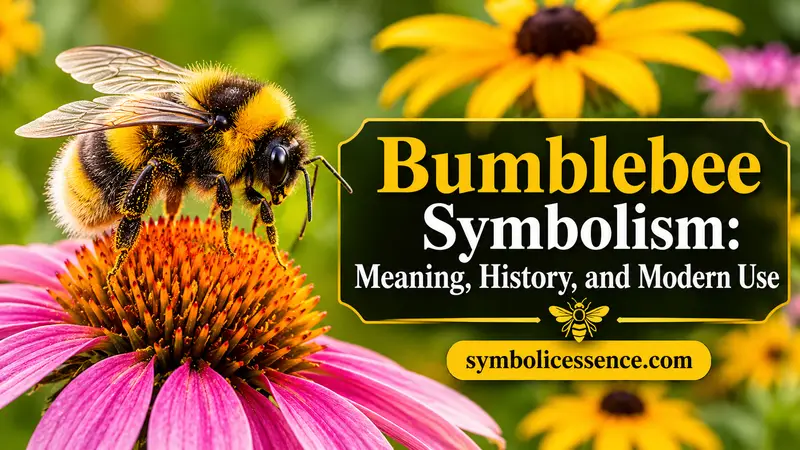
A bumblebee is easy to recognize by its round, fuzzy body, black-and-yellow stripes, and steady movement between flowers. Unlike the familiar image of a honeybee, a bumblebee often looks larger and softer, giving it a friendly appearance even while it works among plants.
Bumblebee symbolism commonly connects this insect with hard work, persistence, cooperation, community, and new beginnings. People may look up its meaning after seeing one repeatedly, choosing a bee tattoo, receiving bee-themed jewelry, or noticing bumblebee designs in gardens and home decor.
In the United States, the bumblebee also has a practical connection to nature. It helps pollinate crops and wildflowers, making it a familiar image in gardening, environmental education, and conversations about protecting pollinators. Its meaning often combines personal encouragement with appreciation for the natural world.
Quick Answer
Bumblebees commonly symbolize hard work, persistence, teamwork, community, and growth. These associations developed from the insect’s visible behavior, its role in pollination, and older cultural traditions that connected bees with organized work, productivity, and social life.
TL;DR
- Bumblebees represent steady effort, determination, and cooperation.
- Their fuzzy bodies and flower visits make them recognizable garden symbols.
- Historical bee imagery often connected insects with industry and organized communities.
- American culture uses bumblebees in gardening, conservation, and personal expression.
- Bumblebee tattoos often represent resilience, independence, and meaningful progress.
- Their pollination role connects them with renewal and environmental responsibility.
What Does a Bumblebee Look Like?
Bumblebees belong to the genus Bombus, a group of insects known for their rounded bodies and thick covering of hair. Most have black and yellow markings, although some species also display orange, white, or reddish bands.
They are commonly seen flying around gardens, meadows, parks, farms, and flowering trees. In the United States, several species appear in different regions, including the common eastern bumblebee and the American bumblebee.
Their appearance contributes to their symbolic meaning. The soft, rounded body can suggest friendliness, warmth, and gentleness, while the constant movement between flowers suggests activity and purpose.
A bumblebee also has a noticeable presence without being especially large. It can fly from flower to flower, sometimes producing a low buzzing sound that makes it easy to notice nearby.
These physical qualities help explain why artists often use bumblebees to represent cheerful determination rather than aggression.
The Main Meanings Associated With Bumblebees Today
The most common interpretations come from what people observe about bumblebees and how they contribute to their surroundings.
Hard work and dedication: A bumblebee spends much of its active time collecting pollen and nectar. This behavior makes it a familiar representation of someone who keeps working toward a goal, even when progress takes time.
Persistence: Bumblebees continue visiting flowers and adjusting their flight paths. Their behavior can remind people that reaching a goal often requires repeated effort rather than one dramatic achievement.
Community and cooperation: Many bumblebee species live in colonies. Workers, queens, and males have different roles during the colony’s seasonal life cycle. This organization makes the insect a natural image of shared responsibility.
Growth and renewal: By transferring pollen between flowers, bumblebees help plants reproduce. This makes them suitable symbols of development, fresh opportunities, and the beginning of something new.
Independence and confidence: A bumblebee can also represent personal determination. Its small size compared with its surroundings makes it an appealing image for people who want to express confidence without appearing boastful.
These meanings are related, but they are not identical. A person choosing a bee design to represent teamwork may understand it differently from someone choosing one as a reminder to keep moving forward.
Where Did Bee Symbolism Begin?
The history of bee imagery is much older than modern garden decorations and environmental campaigns. Bees have appeared in art, religious traditions, royal imagery, and written records across different societies.
One important distinction matters: historical references usually concern bees in general, not specifically the modern scientific category of bumblebees.
In ancient Egypt, bees were connected with kingship and royal authority. The bee was used in royal titles and imagery, including associations with Lower Egypt. This gave the insect a place in the visual language of political power.
In ancient Greece, bees appeared in religious stories and artistic traditions. They were sometimes associated with particular goddesses, sacred places, and priestly figures. The connection between bees and organized communal life also became part of later cultural interpretations.
During the Roman period, writers discussed beekeeping, honey production, and the social organization of bees. Their observations helped establish bees as examples of productive activity.
These traditions influenced later European ideas about industry, order, and cooperation. However, it would be inaccurate to claim that every historical bee meaning automatically applies to bumblebees.
Why Bees Became Symbols of Hard Work
Bees became associated with productivity partly because their behavior was visible and easy to compare with human work.
Honeybees collect nectar and pollen, maintain their colonies, and produce honey. People who observed these activities often used bee communities as examples of organized labor.
This comparison became especially familiar in European literature and political thought. Writers used the hive as an image of a society in which individuals performed different tasks for a shared purpose.
The association continued during the Industrial Revolution, when productivity, discipline, and organized work became major public concerns.
Bumblebees inherited some of these broader associations, but their symbolism has a slightly different character. Their rounded bodies, flower visits, and less formal appearance often make them seem more approachable than the highly organized honeybee hive.
As a result, the bumblebee can represent hard work without necessarily suggesting strict rules or constant productivity.
It is often understood as a reminder to work consistently while remaining connected to the natural world.
What Do Bumblebees Represent in American Culture?
In the United States, bumblebees have a particularly strong connection to gardens, seasonal change, and environmental awareness.
During spring and summer, people regularly see them visiting flowering plants in backyards, community gardens, public parks, and farms. Their presence often signals that flowers are producing nectar and pollen and that pollinators are active.
American gardening culture has helped make them familiar symbols of healthy outdoor spaces. Garden signs, seed packets, educational posters, and plant labels frequently feature bumblebee illustrations.
They also appear in school projects about ecosystems. Teachers use them to explain pollination, plant reproduction, biodiversity, and the relationship between insects and food production.
Another important American association is conservation. Several bumblebee populations face threats from habitat loss, pesticide exposure, disease, and climate-related changes. The rusty patched bumblebee, for example, was listed as endangered under the U.S. Endangered Species Act in 2017.
Because of these concerns, bumblebee images sometimes communicate environmental responsibility. A small bee illustration on a garden sign may encourage people to plant native flowers, avoid unnecessary pesticide use, or leave suitable nesting areas undisturbed.
The insect therefore carries two connected meanings in American culture: personal qualities such as determination and practical concerns about protecting nature.
Bumblebee Symbolism Across Different Cultures
The historical meaning of bees varies across societies, and it is important not to treat all traditions as interchangeable.
Ancient Egypt: Bees had a connection with royal authority. Their use in royal titles and imagery made them part of the visual representation of political power.
Ancient Greece: Bees appeared in religious and literary traditions. Certain priestly figures were associated with bees, and later writers connected them with sacred service and organized communities.
European Christian traditions: Medieval European religious writing sometimes used bees as examples of diligence, cooperation, and orderly communal life. Their production of honey also made them suitable images in discussions of sweetness and spiritual instruction.
European folklore: Bees became connected with household life and community customs. In parts of Europe, traditions such as telling bees about important family events developed around the belief that the hive should remain informed about changes in the household.
These are documented associations involving bees generally. They do not establish one universal meaning for bumblebees, and the meaning of a modern bumblebee image depends heavily on its setting.
For an American reader, the most familiar interpretations usually come from nature, gardening, work, and popular visual culture rather than a specific inherited religious tradition.
What Does a Bumblebee Mean Emotionally?
People often connect with bumblebees because the insect combines activity with an approachable appearance.
Its small size can make it an appealing reminder that a person does not need to be the biggest or strongest to make a difference. Someone dealing with a difficult period might use a bee image as a personal reminder to keep taking manageable steps.
The insect’s movement from flower to flower can also suggest curiosity and openness. It does not remain in one place when resources are available elsewhere. This can appeal to people experiencing a career change, starting a new project, or adjusting to a different stage of life.
For others, the connection is more personal. A bumblebee may remind someone of a grandparent’s garden, childhood summers, or a favorite outdoor place.
This emotional meaning is not fixed. A symbol becomes meaningful partly through the memories and experiences a person attaches to it.
What Does a Bumblebee Tattoo Symbolize?
Bumblebee tattoos are often chosen for their combination of attractive design and personal meaning.
A person may choose this tattoo to represent:
- Resilience: Continuing after setbacks.
- Determination: Staying committed to a personal goal.
- Community: Appreciating family, friendship, or shared responsibility.
- Growth: Moving into a new stage of life.
- Independence: Building confidence and trusting personal abilities.
- Nature appreciation: Showing affection for gardens, flowers, and wildlife.
The design can change the message.
A small, simple bee tattoo may communicate a quiet personal reminder. A bumblebee surrounded by flowers can emphasize growth and a connection with nature. A flying bee may suggest movement, freedom, and progress.
Some people add dates, initials, or small flowers to connect the design with a specific person or memory.
Unlike some traditional symbols, a bumblebee tattoo does not have one fixed cultural interpretation. Its meaning is usually personal.
Why Are Bumblebees Popular in Jewelry and Fashion?
Bumblebee designs work well in jewelry because their shape is easy to recognize. Their striped bodies and small wings can be represented in pendants, earrings, rings, brooches, and bracelets.
In American fashion, bee-themed accessories can communicate several things at once.
A gold bee pendant may suggest confidence, productivity, or an appreciation for nature. A small enamel bee pin can add a playful detail to a jacket or bag. Floral bee earrings often create a softer, garden-inspired appearance.
Some people wear bee jewelry as a reminder of a personal goal or a connection with someone they love. Others simply like the design.
The combination of black, yellow, and gold also makes the insect visually distinctive. Designers can use these colors in both delicate accessories and bold statement pieces.
How Bumblebees Appear in Home Decor and Gardening
Bumblebee illustrations are common in American home and garden products, especially during spring and summer.
Common examples include:
- Botanical wall prints featuring bees and wildflowers.
- Ceramic mugs with small bumblebee illustrations.
- Decorative cushions and kitchen towels.
- Garden signs encouraging pollinator-friendly planting.
- Flower pots and outdoor decorations.
- Greeting cards with bees surrounded by spring flowers.
The meaning depends on the product.
Inside a home, a bee illustration may create a cheerful, welcoming atmosphere. In a garden, it can encourage interest in pollination and wildlife. On a greeting card, it may represent encouragement, affection, or a wish for a productive year.
A bumblebee design also fits cottage-style decoration, which often uses flowers, natural colors, and images of everyday wildlife.
What Does Seeing a Bumblebee Mean?
Seeing a bumblebee does not have a scientifically established supernatural meaning. However, people sometimes interpret an unexpected encounter as a personal reminder.
For example, someone starting a new business might see a bee visiting flowers and connect the moment with patience and consistent effort. Someone working through a difficult period might view the encounter as a reminder to keep going.
In everyday life, the most useful explanation is often ecological. A bumblebee may be searching for nectar, collecting pollen, or looking for a suitable nesting location.
If one appears in your garden, it can also be a reason to notice which plants attract pollinators and whether your outdoor space provides enough flowers throughout the growing season.
A symbolic interpretation can add personal meaning to an ordinary experience without requiring the belief that the encounter predicts an event.
Bumblebee Symbolism in Dreams
Dream interpretations involving bumblebees are personal rather than scientifically established. Still, their common associations offer a few ways to think about such dreams.
A bumblebee visiting flowers: This may reflect growth, new interests, or a period of personal development.
A bumblebee flying around you: It may represent an ongoing responsibility, a busy schedule, or something demanding your attention.
A bumblebee working among many flowers: Some people connect this image with productivity, cooperation, or the need to balance several responsibilities.
A bumblebee resting: This may bring attention to the need for a break after a period of effort.
A bumblebee sting: This could reflect concern about conflict, personal boundaries, or an uncomfortable interaction.
The emotions in the dream matter more than a fixed interpretation. A calm encounter may feel different from a frightening one, even when the same insect appears.
Misunderstandings
Several common assumptions can create confusion about these insects and their symbolism.
All bees have the same meaning. Honeybees, bumblebees, and other bee species have different physical features and ecological roles. Their cultural associations can overlap, but they are not identical.
Bumblebees symbolize only hard work. Productivity is one association, but community, pollination, renewal, and environmental care are also common interpretations.
A bumblebee encounter predicts good luck. Some people personally treat sightings as encouraging signs, but there is no scientific evidence that they predict future events.
Bumblebees are naturally aggressive. Bumblebees can sting, especially when threatened, but they are generally focused on finding food rather than attacking people. Their presence near flowers is not automatically a warning.
Every bee design has a religious meaning. Bee imagery has appeared in different religious traditions, but a modern necklace, tattoo, or garden illustration does not automatically carry religious significance.
Understanding these differences helps separate established cultural associations from personal beliefs and modern interpretations.
How Bumblebee Meaning Has Changed Over Time
The meaning of bee imagery has developed alongside changes in human society.
In ancient societies, bees could represent royal authority, sacred traditions, and organized communities. In medieval Europe, their collective behavior became a common example of cooperation and orderly work.
During the Industrial Revolution, the association with productivity became especially useful in discussions about labor and social organization. Bees represented the value of consistent effort and shared responsibility.
In the twentieth century, bee imagery also became familiar in advertising, children’s illustrations, household products, and popular entertainment. The insect’s distinctive appearance made it easy to use in friendly, recognizable designs.
By the late twentieth and early twenty-first centuries, environmental awareness added another important meaning. Pollinator decline and habitat protection brought attention to the role of bees in ecosystems.
From 2025 into 2026, this environmental association remains relevant in American gardening and conservation discussions. Bumblebees are not simply decorative images. They are also recognizable representatives of the pollinators that support flowering plants and agricultural systems.
Younger audiences may encounter them through nature-themed clothing, tattoos, social media illustrations, and conservation campaigns. Older associations with work and community remain, but they now share space with ideas about sustainability and personal well-being.
What Different Bumblebee Designs Communicate
The setting and visual details of a bee image can change its meaning. The following table shows how Americans may interpret common designs.
| Context | Meaning in USA | Common Associations | Notes |
| Small bumblebee tattoo | Personal determination | Resilience, confidence, progress | Often chosen as a private reminder |
| Bee and flower illustration | Growth and renewal | Nature, spring, new opportunities | Popular in botanical artwork |
| Gold bee necklace | Personal identity and appreciation | Confidence, affection, individuality | May also be a fashion choice |
| Garden bee sign | Environmental responsibility | Pollination, native plants, wildlife | Often used in pollinator-friendly gardens |
| Bumblebee greeting card | Encouragement and warmth | Friendship, support, happiness | Meaning depends on the message |
| Bee-themed home decoration | Cheerful domestic atmosphere | Comfort, nature, seasonal style | Common in cottage-inspired interiors |
FAQs
Is a bumblebee a symbol of good luck?
Many people interpret a bumblebee sighting positively because the insect is associated with growth, productivity, and healthy gardens. However, there is no universal traditional rule that seeing one guarantees good fortune.
Does a bumblebee have a connection with love?
A bumblebee can represent affection, partnership, and shared effort because of its association with community. In personal artwork or gifts, a bee paired with flowers or two bees together may express a relationship built on mutual support.
What does a dead bumblebee symbolize?
A dead bumblebee may represent an ending, a change in priorities, or concern about something that needs attention. These are personal interpretations rather than established predictions. In nature, a dead bee can also be an ordinary part of an insect’s life cycle.
Are bumblebees connected with femininity?
Some historical European traditions connected bees with goddesses and female religious figures. Modern bumblebee designs, however, are not limited to women and do not have one established gender meaning.
What does a bumblebee and sunflower design mean?
This combination often represents warmth, growth, optimism, and a connection with nature. Sunflowers are associated with summer and sunlight, while the bee adds the idea of pollination and productive activity.
Is the bumblebee a symbol of environmental protection?
Yes, in modern American conservation messaging, bumblebees can represent pollinator protection and biodiversity. Their declining populations in some regions have made them recognizable examples of why native flowers and suitable habitats matter.
Does a bumblebee have a specific religious meaning?
There is no single religious meaning shared across all traditions. Historical bee imagery appears in ancient Egyptian, Greek, and European Christian contexts, but a modern bumblebee symbol does not automatically represent a particular faith.
Conclusion
Bumblebee symbolism brings together several familiar ideas: hard work, persistence, cooperation, personal growth, and care for nature. Its associations come partly from the insect’s behavior and partly from older traditions that used bees as examples of organized communities and productive work.
In modern American life, the bumblebee has become both a personal and environmental image. It appears in tattoos, jewelry, garden decorations, educational materials, and conservation campaigns. Some people see it as a reminder to stay committed to their goals, while others value what it represents about pollination and healthy ecosystems.
Perhaps its most practical message is also its simplest: small actions can contribute to something much larger. A bumblebee visiting one flower at a time is a useful reminder that progress does not always need to happen all at once.