
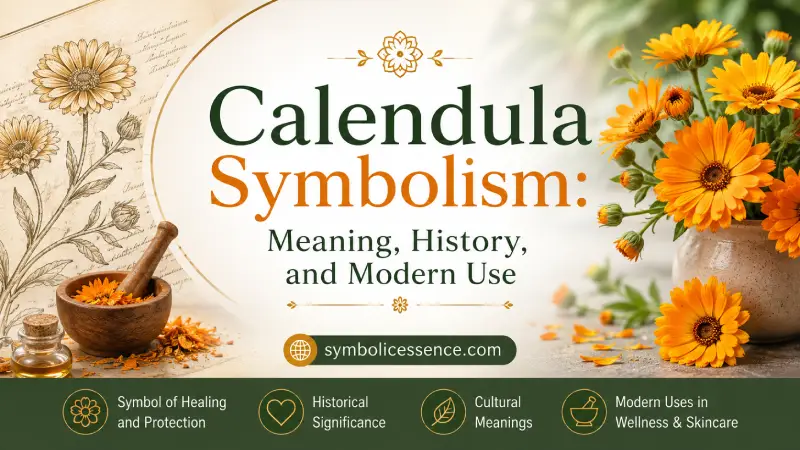
Calendula is the familiar golden-orange flower often called pot marigold, a garden herb valued for its cheerful color, edible petals, and long history in household herbal traditions. Calendula symbolism today most often centers on warmth, healing, resilience, hope, remembrance, and the ability to find brightness during difficult periods.
Those meanings are not all from one tradition. Some developed from the flower’s sunny appearance and long blooming season, while others came from European Christian folklore, herbal use, and the nineteenth-century language of flowers. The result is an unusual symbol that can communicate both happiness and sorrow without those ideas necessarily contradicting each other.
Botanically, the species most people mean by calendula is Calendula officinalis, a member of the daisy family. It is also important to distinguish it from Tagetes marigolds, because the two groups are often given each other’s cultural traditions even though they are different plants.
Quick Answer
Calendula symbolism commonly represents joy, healing, warmth, resilience, and hopeful renewal in modern American culture. Historically, calendula has also carried associations with remembrance, grief, Christian devotion, protection, and the recurring passage of time.
TL;DR
- Calendula commonly represents warmth, healing, optimism, and emotional resilience.
- Its yellow and orange flowers create strong solar associations.
- European traditions connected calendula with Mary, protection, and folk remedies.
- Victorian flower language gave marigold meanings of grief and remembrance.
- Modern Americans often use calendula to symbolize gentle recovery and encouragement.
- Calendula should not be confused with Mexican or African Tagetes marigolds.
What Calendula Looks Like and Where You See It
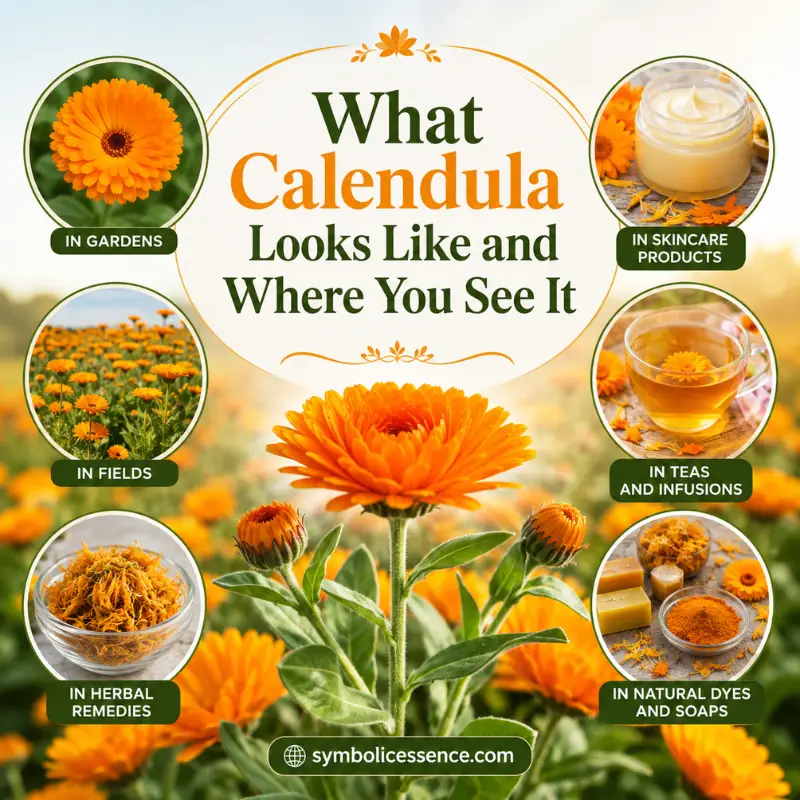
Calendula usually produces daisy-like flower heads in shades of yellow, gold, apricot, and orange. Cultivated varieties can also show cream, pinkish, reddish, or darker centers. The plants are commonly grown in borders, cottage gardens, containers, herb gardens, and cutting gardens.
That physical appearance matters to its symbolism. A fully open calendula flower resembles a small disk of sunlight surrounded by narrow rays. The visual effect naturally supports associations with cheerfulness, warmth, encouragement, and vitality.
Calendula also sits between the ornamental and practical worlds. Its petals have been used in food, dyes, and herbal preparations, so it rarely feels like a flower valued only for decoration.
That mixture of beauty and usefulness helps explain why modern interpretations often emphasize care that produces visible results rather than abstract beauty alone.
The Core Meanings of Calendula
Calendula does not have one universally fixed symbolic definition. Its most useful meanings come from several overlapping traditions.
| Context | Common Meaning in the USA | Main Association | Notes |
|---|---|---|---|
| Personal growth | Resilience and renewal | Returning after hardship | Often used as an encouraging symbol |
| Wellness | Healing and care | Herbal tradition | Symbolic, not a medical guarantee |
| Relationships | Warmth and affection | Golden color | Often less romantic than a rose |
| Memorial use | Remembrance | Victorian flower language | Can acknowledge grief without darkness |
| Spiritual imagery | Devotion and protection | European Christian folklore | Meaning depends on tradition |
| Garden design | Cheerfulness and abundance | Long, colorful blooming | Mostly a modern visual association |
The flower works particularly well as a symbol when someone wants to express optimism without pretending hardship never happened. It can suggest that warmth and sorrow are able to exist at the same time.
Why Yellow and Orange Shape Its Meaning
Color is one of the simplest reasons calendula is associated with happiness.
Golden yellow commonly brings to mind sunlight, daylight, warmth, harvest colors, and energetic spaces. Orange adds visual intensity and can suggest enthusiasm, friendliness, movement, and confidence.
These interpretations are cultural rather than scientific laws. A person does not automatically experience joy because a flower is orange. Still, color strongly affects the messages people build into bouquets, tattoos, branding, gardens, and home decor.
Calendula’s color becomes especially interesting when paired with its older mourning associations. Its bright appearance allows remembrance to be represented through warmth instead of somber colors. That is one reason grief and joy can both belong to the flower without creating a contradiction.
The Name Calendula and the Idea of Recurring Time
The name itself contributed to the flower’s symbolic history.
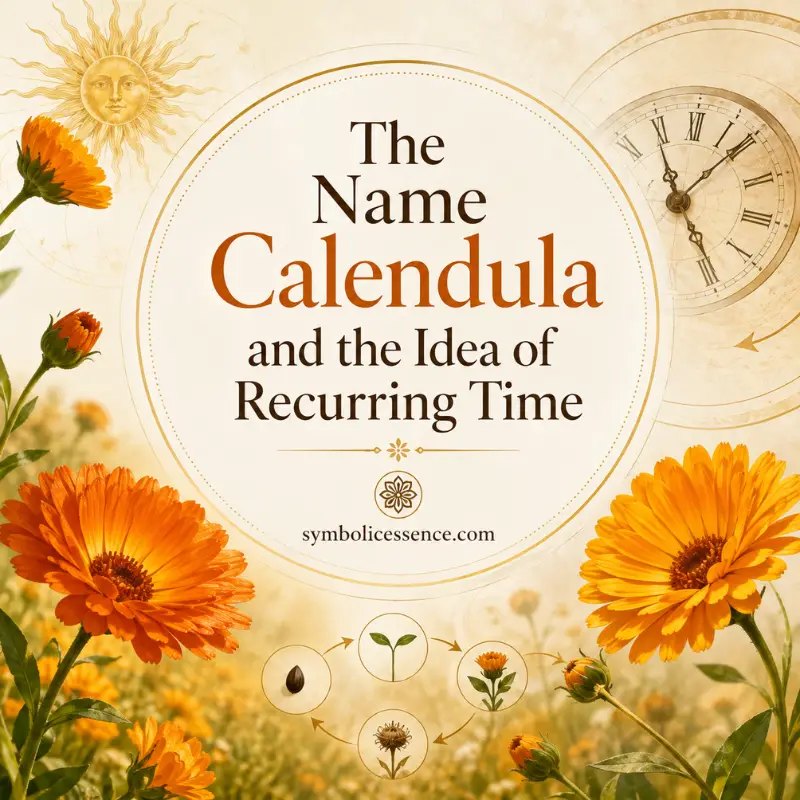
The genus name has been connected with the Latin Kalendae, referring to the first day of a Roman month. Historical explanations linked the name with the plant’s tendency to flower repeatedly or appear in bloom across many months under favorable conditions.
Older writers therefore treated the flower almost like a natural calendar.
Symbolically, that creates associations with:
- recurring cycles
- consistency
- the passage of time
- renewal after endings
- returning opportunities
Modern readers do not need to believe calendula literally measures the calendar to use that symbolism. The historical association works more as a metaphor: life continues in cycles, and another period of growth can follow one that has ended.
Calendula, “Mary’s Gold,” and Christian Tradition
Calendula became connected in parts of Europe with the Virgin Mary through names such as marigold, traditionally interpreted as “Mary’s gold.”
Marian garden traditions associated golden flowers with Mary’s heavenly glory, and historical Christian garden material includes calendula among plants linked with her. The exact legends attached to “Mary’s gold” vary by place and period, so it is safer to understand the association as folk devotion rather than a formal Christian doctrine.
Within that context, calendula can represent:
Devotion. The flower may express reverence or faithful affection.
Purity of intention. Its Marian association sometimes gives the flower a devotional rather than romantic meaning.
Grace and protection. Later folklore expanded religious associations into ideas of spiritual care and safeguarding.
For American Catholics interested in Mary gardens or traditional religious gardening, calendula can therefore carry a recognizable devotional layer. For most Americans, however, that meaning is much less immediate than its associations with warmth and healing.
European Folklore Added Protection and Folk-Magic Meanings
Calendula also appears in European folk belief outside formal religion.
Historical traditions gave the flower supposed protective properties. Accounts describe marigold wreaths placed near entrances and calendula gathered at particular seasonal moments, including Midsummer, because people believed timing increased its effectiveness.
Other old traditions linked the flower with love divination, dreams, or attempts to discover a future partner.
These stories should be understood as folklore, not evidence that the plant possesses supernatural abilities.
For symbolism, however, folklore left a lasting vocabulary. Someone choosing calendula for a talisman-style tattoo or protective garden may interpret it as representing:
- safety
- watchfulness
- good fortune
- emotional protection
- care for the home
Modern use usually borrows the metaphor without requiring literal belief in the older magic.
Why Victorian Calendula Could Mean Grief
One of calendula’s most surprising meanings is sorrow.
During the nineteenth-century popularity of floriography, the practice of assigning messages to flowers, marigold appeared in flower dictionaries with meanings connected to grief, mourning, despair, and remembrance. Historical flower-language texts explicitly list marigold as representing grief.
The Shakespeare Birthplace Trust likewise notes that Victorian associations included grief, despair, mourning, and remembrance.
This darker symbolism is useful because it shows how floral meanings change over time. Calendula did not become a sad-looking flower. Instead, cultural convention assigned a specific emotional message to it.
Today, grief is not usually the first meaning an American would infer from a calendula bouquet. Still, the historical association makes the flower appropriate for someone who wants a memorial symbol that feels warm rather than bleak.
What Calendula Commonly Means in the United States
In contemporary American use, calendula is more likely to suggest wellness, natural living, healing, gardening, encouragement, and warmth than Victorian despair.
Part of that shift comes from how Americans encounter the plant. Calendula appears in herb gardens, teas, soaps, oils, salves, cosmetics, edible-flower gardening, and natural-care products. Modern horticultural references still describe its long culinary and medicinal history.
As a result, many people encounter calendula first as something associated with soothing care.
Its symbolism in the United States can therefore feel especially appropriate for:
- recovering from a difficult period
- supporting a friend
- beginning a healthier routine
- celebrating personal growth
- creating a calming garden
- marking a new chapter
- remembering someone with warmth
The strongest American interpretation is less about ancient ritual and more about healing combined with optimism.
Why Calendula Became a Symbol of Healing
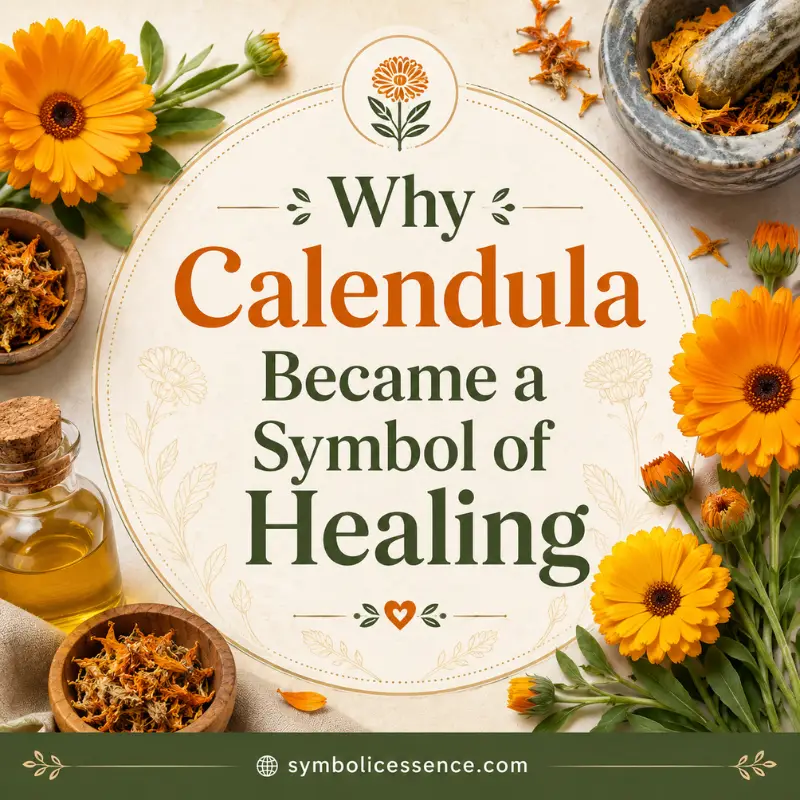
The association with healing is not based only on flower color.
Calendula has a documented history of culinary and herbal use, and Calendula officinalis continues to appear in modern herbal and skincare preparations. Historical uses have varied greatly, and evidence for specific health claims is not equally strong.
Symbolically, however, centuries of treating calendula as a useful household herb created a durable connection between the flower and care.
This can extend beyond physical healing. In modern personal symbolism, calendula can represent:
Emotional recovery: learning to function again after grief, rejection, or exhaustion.
Gentle support: helping someone without demanding immediate change.
Restoration: rebuilding confidence or stability after disruption.
Practical compassion: caring through actions rather than words alone.
That last meaning suits calendula particularly well because the plant historically belonged to kitchens, gardens, and household preparations rather than only ceremonial displays.
Calendula as a Symbol of Resilience
Calendula is widely cultivated as an annual and is valued by gardeners for producing repeated flowers over an extended season when conditions suit it. It can also reseed in garden settings.
Gardeners often translate those traits into a human metaphor: keep growing, keep returning, keep producing color.
That makes calendula a good resilience symbol, but not necessarily an aggressive one. A thorn, sword, or phoenix may represent overcoming adversity through force. Calendula suggests a quieter form of endurance.
Its message is closer to:
Continue tending what matters even after conditions become difficult.
That interpretation makes the flower suitable for recovery tattoos, anniversary gifts after a hard year, or personal artwork marking steady progress.
Joy and Grief Can Both Belong to the Same Flower
At first, calendula’s meanings may seem inconsistent.
How can the same flower represent happiness and grief?
Because symbolism rarely works like a dictionary with one permanent definition.
Its bright color encourages associations with joy. Its herbal tradition supports healing. Victorian flower language linked marigold with grief. Christian traditions added devotion. Folk beliefs added protection.
Together, these layers create a flower that can represent the emotional process surrounding loss rather than only sadness itself.
For someone memorializing a loved one, calendula might mean:
“I remember you with warmth.”
For someone recovering from hardship, it might mean:
“Pain happened, but it does not own the future.”
That emotional duality is one of the flower’s most distinctive modern strengths.
Calendula Is Not the Same as the Día de Muertos Marigold
One of the most common symbolism mistakes involves the word marigold.
Calendula is often called pot marigold, but Calendula officinalis is botanically distinct from the Tagetes plants commonly called African, French, Aztec, or Mexican marigolds.
This distinction matters greatly when discussing Día de Muertos.
The famous Mexican cempasúchil associated with Día de Muertos is Tagetes erecta, not Calendula officinalis. Its orange flowers are traditionally used on ofrendas and are associated with guiding or welcoming the dead during the observance.
Therefore, saying that calendula itself is “the Mexican flower of the dead” is botanically misleading.
An American tattoo or floral article may use “marigold” broadly, but accurate symbolism should identify the species before borrowing a specific cultural tradition.
The Same Caution Applies to South Asian Marigold Traditions
Another frequent mix-up involves India.
Orange and yellow marigolds are highly visible in South Asian weddings, festivals, religious ceremonies, garlands, and decorative traditions. However, many of the marigolds cultivated for these purposes belong to the genus Tagetes, especially Tagetes erecta and related species. Modern horticultural research on Indian marigold cultivation likewise focuses heavily on Tagetes.
That does not mean calendula has no history in Asia. The genus has a broader Old World distribution, and Calendula officinalis has been cultivated widely. The problem comes from treating every flower called “marigold” as culturally interchangeable.
For accurate symbolism:
Calendula traditions should be identified as calendula traditions, while Tagetes traditions should remain attached to Tagetes.
This small botanical distinction prevents cultural traditions from being flattened into a generic “marigold meaning.”
Calendula Tattoos and Personal Symbolism
Calendula works particularly well as tattoo imagery because its shape is recognizable without being as culturally predetermined as a rose or lotus.
A calendula tattoo may represent:
- recovery after illness or hardship
- emotional resilience
- remembrance of a loved one
- warm friendship
- personal optimism
- protection
- devotion
- a new phase of life
A single orange flower often reads as optimistic and energetic. A calendula paired with a name, date, or memorial object shifts the emphasis toward remembrance.
Pairing calendula with the sun can strengthen ideas of vitality and returning light. Pairing it with a crescent moon may emphasize changing cycles. A botanical-style illustration can highlight its identity as an herb and garden plant rather than giving it an overtly spiritual meaning.
The wearer ultimately determines the tattoo’s personal significance, especially because calendula has several historical interpretations rather than one universally recognized modern code.
Calendula in Jewelry, Decor, Weddings, and Gifts
Calendula is also useful outside tattoo culture.
In jewelry, pressed-flower pieces and botanical designs can communicate warmth, healing, or connection to gardening and nature.
In home decor, golden calendula imagery tends to feel welcoming rather than formal. It fits cottage, botanical, herbal, rustic, and seasonal styles.
For weddings, calendula can represent joyful endurance, warmth, and a relationship that continues growing through changing seasons. Its orange tones work especially well in late-summer and fall palettes.
As a gift, calendula can be especially meaningful for someone entering a period of recovery or change. Because its symbolism is supportive without being strongly romantic, it can suit friends, relatives, coworkers, caregivers, and partners.
Common Misunderstandings About Calendula Meaning
The biggest mistake is treating every symbolism claim found under the word “marigold” as automatically belonging to calendula.
The common name covers several unrelated or only distantly related flowers. Pot marigold is Calendula officinalis, while widely grown African and French marigolds belong to Tagetes.
Another mistake is presenting folklore as established religion or history. A protective calendula charm from folk tradition should not be described as an official Christian belief.
It is also inaccurate to claim that calendula has always symbolized happiness. Historical flower dictionaries show that meanings changed substantially, and grief was once prominent in European flower language.
Finally, symbolic healing should not be confused with medical effectiveness. A flower can represent recovery even when a specific health claim about a calendula product remains uncertain.
How Calendula’s Meaning Changed Over Time
Calendula’s symbolic evolution is easier to understand as a sequence of added layers rather than a single meaning replacing another.
Its golden flowers encouraged early associations with sunlight and recurring bloom. Its practical use as an edible and herbal plant connected it with household care. European Christian culture developed Marian associations around “Mary’s gold.” Folk traditions attached ideas of protection and divination. Victorian floriography emphasized grief and remembrance.
Modern American culture has shifted the center again.
Today, calendula is widely encountered through gardening, botanical products, wellness culture, floral art, and herbal traditions. That environment favors meanings such as healing, warmth, resilience, and natural care.
The older meanings have not disappeared. They now function as additional layers someone can intentionally draw upon.
FAQs
What does calendula symbolize spiritually?
Calendula can symbolize protection, devotion, renewal, and hope in spiritual contexts. These interpretations come mainly from folk tradition, Christian plant symbolism, and later symbolic use rather than one universal religious teaching.
Does calendula symbolize grief?
Yes, especially in historical flower language. Nineteenth-century floriography sources associated marigold with grief, despair, mourning, and remembrance, although modern Americans are more likely to read calendula as warm or healing.
Is calendula a symbol of healing?
Healing is one of its strongest modern symbolic associations because calendula has a long history as an herbal and household plant. The symbolic meaning should be separated from claims that any calendula product can treat a specific medical condition.
What does an orange calendula symbolize?
Orange calendula commonly suggests warmth, optimism, friendliness, vitality, and recovery. In a memorial arrangement or tattoo, the same warm color can instead communicate affectionate remembrance.
What does a calendula tattoo mean?
A calendula tattoo often represents resilience, healing, hope, remembrance, or personal renewal. Its exact meaning depends on the design, accompanying imagery, and the wearer’s own reason for choosing the flower.
Is calendula the same flower used for Día de Muertos?
No. The iconic cempasúchil used for Día de Muertos is primarily Tagetes erecta, the Mexican or Aztec marigold, while calendula is Calendula officinalis. Both may be called marigolds in English, which causes frequent confusion.
Is calendula associated with the Virgin Mary?
Calendula has been included in European and later American Marian garden traditions and is connected with the old name “Mary’s gold.” These associations belong to devotional folklore and gardening tradition rather than a formal doctrine required across Christianity.
Conclusion
Calendula symbolism brings together warmth, healing, resilience, remembrance, devotion, and recurring renewal. Its golden color explains part of that message, but its fuller meaning developed through herbal practice, European folklore, Christian plant traditions, Victorian flower language, and modern garden culture.
Its most distinctive quality is the way it holds joy and sorrow together. Calendula does not have to represent a life untouched by difficulty. It can instead represent warmth that returns after difficulty, care that continues through change, and remembrance that keeps affection brighter than loss.


