
Last Updated: September 10, 2026
Nightshade symbolism in modern culture most often centers on danger, death, forbidden knowledge, seductive beauty, witchcraft, and the uneasy boundary between healing and harm. These meanings usually refer specifically to deadly nightshade, or Atropa belladonna, rather than every plant belonging to the much larger nightshade family.
The plant is unusually well suited to symbolic interpretation. Its dark berries can look inviting even though the plant is highly toxic, while compounds associated with belladonna have also played roles in medicine. Its scientific name connects it with a figure from Greek mythology associated with death, and European folklore tied it to poison, magic, and altered states of consciousness.
In the United States today, nightshade appears most often in gothic art, tattoos, botanical illustration, Halloween imagery, fantasy, and witch-inspired aesthetics. The older associations remain recognizable, but modern users often reinterpret them as symbols of independence, boundaries, survival, or beauty that should not be underestimated.
Quick Answer
Nightshade symbolism commonly represents danger, death, seductive beauty, secrecy, and forbidden knowledge in modern American culture. Historically, deadly nightshade was also associated with poison, medicine, European witchcraft traditions, altered perception, and the Greek Fate Atropos, creating a lasting connection between attraction and mortality.
TL;DR
- Nightshade most often represents danger, death, and deceptive beauty.
- Belladonna’s name connects beauty with potentially lethal consequences.
- European folklore linked the plant with witchcraft and magical preparations.
- Its medical history creates a strong healing-versus-harm duality.
- Modern tattoos often emphasize boundaries, independence, and dark beauty.
- Not every plant in the nightshade family is poisonous.
What Nightshade Actually Refers To
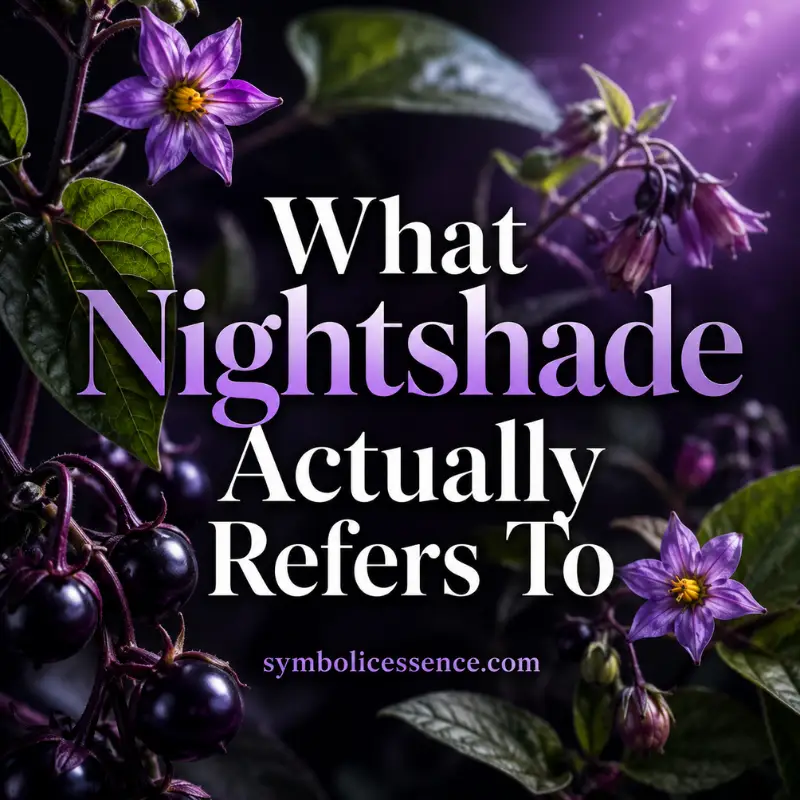
“Nightshade” can create confusion because it is both a broad botanical term and a common name associated with dangerous plants.
The nightshade family, Solanaceae, includes familiar food crops such as tomatoes, potatoes, peppers, and eggplants. Deadly nightshade, however, is Atropa belladonna, a toxic perennial native primarily to parts of Europe and western Asia. It has also been introduced outside its native range.
Most symbolic references to “nightshade” are really references to deadly nightshade or belladonna. A tomato plant technically belongs to the same botanical family, but it does not carry the same cultural associations with death, witchcraft, poison, and dangerous beauty.
Visually, belladonna has dull purple-brown, bell-shaped flowers followed by glossy dark berries. That contrast between an ordinary-looking plant and serious toxicity helps explain much of its symbolism.
The Core Meanings of Nightshade
Although meanings vary by artwork or personal use, several associations occur repeatedly.
| Context | Common Meaning in the USA | Why It Fits |
|---|---|---|
| Poison imagery | Danger, death, warning | Belladonna is genuinely toxic |
| Gothic art | Dark beauty, mortality | Attractive berries contrast with danger |
| Witch imagery | Magic, forbidden knowledge | European folklore connected it with witchcraft |
| Tattoos | Boundaries, independence, resilience | Beauty combined with defensiveness |
| Medicine | Healing and harm | Belladonna compounds have medical applications |
| Romance imagery | Dangerous attraction | “Belladonna” combines beauty with toxicity |
These meanings work because they grow from recognizable features of the plant rather than from a single universal symbolic tradition.
Why Danger and Death Became Its Strongest Meanings
The association with death is not merely poetic.
Deadly nightshade contains tropane alkaloids including atropine, hyoscyamine, and scopolamine. Poisoning can produce serious anticholinergic effects, including agitation, confusion, hallucinations, abnormal heart rate, coma, and potentially death. U.S. poison-control resources therefore classify belladonna among dangerous poisonous plants.
That biological reality gave the plant a cultural identity very different from harmless flowers associated mainly with affection or celebration.
In symbolic art, nightshade can therefore communicate:
- mortal danger
- a serious warning
- irreversible consequences
- something attractive that should not be touched
- the presence of risk beneath a beautiful surface
The message is often less “evil” than caution. Nightshade represents something whose appearance does not reveal its full consequences.
Atropos and the Symbolism of Fate
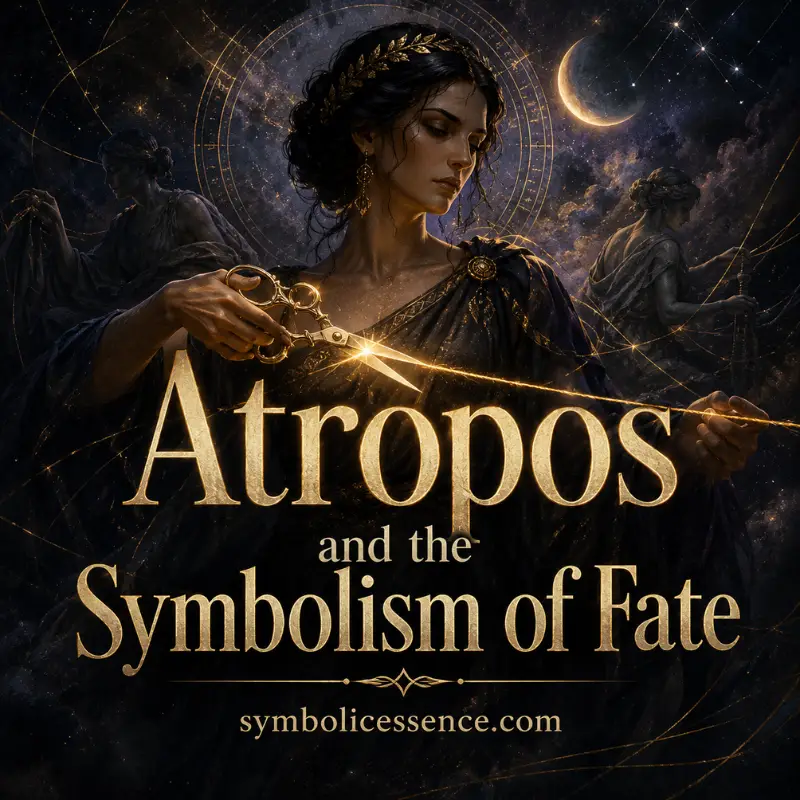
Even the botanical name strengthens the connection with mortality.
The genus name Atropa refers to Atropos, one of the three Fates in Greek mythology. In the classical image of the Fates, human life is represented as a thread. Atropos is the figure who cuts that thread, marking its end.
The association was deliberately reflected in the scientific naming of Atropa belladonna. Historical medical scholarship notes that Linnaeus connected the poisonous plant with Atropos because of its ability to end life.
That connection gives nightshade a second layer of death imagery. It can signify not only poison but also:
finality, destiny, mortality, limits, and consequences that cannot be undone.
For artists and tattoo wearers, this makes the plant particularly suitable for imagery about accepting mortality or acknowledging that some decisions permanently change a person’s path.
Why Belladonna Represents Dangerous Beauty
The other half of the plant’s identity is contained in the word belladonna.
The Italian expression bella donna means “beautiful woman.” The name has traditionally been linked with cosmetic practices involving belladonna preparations that enlarged the pupils, an effect caused by atropine-like compounds. The historical association between belladonna and pupil dilation is well established, even though romanticized versions of the cosmetic story sometimes become exaggerated.
The symbolism that developed from this contrast is easy to understand:
something can be beautiful without being safe.
Nightshade may therefore represent seductive danger, attraction mixed with risk, or beauty that demands respect rather than possession.
In modern imagery, that idea can also be turned into a statement about personal boundaries: admiration does not equal access.
Witchcraft, Folklore, and the Idea of Forbidden Knowledge
Few associations have shaped the plant’s modern image more strongly than European witchcraft folklore.
Historical writings and later scholarship connect belladonna, henbane, mandrake, and other tropane-containing plants with preparations described as witches’ ointments, magical brews, love potions, and substances linked with unusual sensations or hallucinations. Kew and historical medical reviews also document the enduring connection between deadly nightshade and stories about witches, flying, and the Devil.
These stories should not be read as proof that one standardized “witchcraft recipe” existed across medieval Europe. Folklore, accusations made during witch persecutions, medical practice, later occult writing, and modern retellings became mixed together over time.
Symbolically, however, the association produced a durable set of meanings:
- secret knowledge
- prohibited practices
- altered consciousness
- magic
- transgression
- independence from accepted authority
That is why nightshade still fits naturally into contemporary witch, occult, and dark-fantasy imagery.
Poison and Medicine: The Plant’s Central Contradiction
Nightshade also symbolizes duality because its history cannot be reduced to poison alone.
Belladonna preparations once appeared in mainstream medical products, including historical American pharmaceuticals. Smithsonian collections document belladonna as an ingredient in medicines and treatments used in the United States during the late nineteenth and early twentieth centuries.
Today, purified atropine remains a legitimate medication. Current U.S. prescribing information includes ophthalmic atropine for pupil dilation and other specific eye-related uses.
This creates one of the plant’s most interesting symbolic contrasts:
the same botanical source can be associated with both injury and treatment.
As a symbol, nightshade can therefore represent balance, dosage, judgment, responsibility, or the idea that usefulness and danger sometimes exist side by side.
What Nightshade Commonly Means in the United States
American culture inherited most of the plant’s older associations from European history rather than developing an entirely separate symbolic tradition.
Today, the plant is especially recognizable within Halloween design, botanical gothic art, fantasy illustration, witch-inspired decor, tattoo culture, dark academia, and alternative fashion.
Its American meaning usually emphasizes one or more of four ideas:
danger, dark beauty, witchcraft, and personal boundaries.
For many people, the symbol is no longer a literal reference to poison. It functions as visual shorthand for a personality that appears attractive or calm but should not be treated as weak.
That modern interpretation helps explain why belladonna imagery works well beside snakes, moths, moons, skulls, ravens, daggers, candles, and other symbols associated with mortality, secrecy, transformation, or caution.
What Does Nightshade Symbolize Spiritually?
Nightshade can carry several spiritual meanings, but there is no single universal spiritual interpretation. In modern symbolism, its strongest themes come from the plant’s toxicity, connection with mortality, European folklore, and the contrast between beauty and danger.
Spiritually, nightshade may represent discernment, protection, transformation, mortality, hidden knowledge, and personal boundaries.
Its poisonous reputation can symbolize the importance of recognizing what appears attractive but may cause harm. In that sense, nightshade can represent spiritual discernment—the ability to look beyond appearances before trusting something or someone.
Its association with Atropos also gives the plant a memento-mori quality. It can remind a person that life has limits and that time, choices, and consequences cannot always be reversed.
For some modern spiritual or witch-inspired practices, nightshade imagery represents mystery and forbidden knowledge. However, these interpretations should not be presented as a universal ancient spiritual tradition. Much of the symbolism comes from European folklore and later cultural reinterpretation.
As a personal symbol, nightshade may therefore express a simple message:
Beauty deserves appreciation, but it also deserves boundaries.
Emotional and Psychological Meaning
Psychologically, nightshade often expresses ambivalence—the feeling of being attracted to something while simultaneously knowing that it carries risk.
That makes it useful for representing complicated experiences rather than simple emotions.
Someone might use nightshade imagery to communicate:
- attraction mixed with distrust
- fascination with dangerous subjects
- acceptance of mortality
- emotional self-protection
- comfort with darker aspects of life
- refusal to appear harmless simply to please others
The plant can also symbolize discernment. Its lesson is not necessarily “avoid beauty.” Instead, it suggests that appearance alone is insufficient evidence of safety.
That interpretation makes nightshade particularly effective when a design explores boundaries, manipulation, temptation, or lessons learned from difficult relationships.
What Does Nightshade Symbolize in Dreams?
Seeing nightshade in a dream can symbolize hidden danger, temptation, emotional caution, mystery, or something attractive that deserves closer examination. Dream symbolism is personal, so the meaning depends heavily on what happened in the dream and how you felt.
A healthy-looking nightshade plant may represent beauty, fascination, or something that has recently captured your attention. If the plant appeared threatening, poisonous, or frightening, it may reflect anxiety about a situation that feels unsafe.
Dreaming about touching or eating nightshade can suggest a conflict between curiosity and caution. The dream may reflect a situation in which you feel drawn toward something while recognizing that it could have consequences.
A nightshade flower or berry may also symbolize hidden aspects of a relationship. Its attractive appearance combined with its poisonous identity makes it particularly useful as a dream image for complicated attraction, distrust, temptation, or emotional boundaries.
If the dream involved removing or avoiding nightshade, the symbolism may lean toward protection, withdrawal, or recognizing a potential problem before it becomes more serious.
Rather than treating a nightshade dream as a prediction, it is more useful to ask what the plant represented emotionally within the dream.
Nightshade Tattoo Meaning
In tattoo culture, belladonna can carry several meanings at once.
A person may choose the plant because it combines delicate botanical shapes with an unmistakably dangerous identity. Unlike a skull, which communicates mortality directly, nightshade can express the same subject more subtly.
Common personal interpretations include:
“Do not underestimate me.”
The plant looks elegant but can be harmful.
“Beauty and danger can coexist.”
This interpretation emphasizes complexity rather than innocence.
What Does a Nightshade Tattoo Mean?
A nightshade tattoo often represents dangerous beauty, independence, mortality, resilience, mystery, or personal boundaries. The meaning can change significantly depending on the design.
A tattoo featuring dark berries may emphasize mortality, poison, or hidden danger. Purple or bell-shaped flowers may place more attention on beauty, mystery, or the contrast between attraction and risk.
Some people may choose nightshade after experiencing a difficult or toxic relationship. In that context, the plant can symbolize learning to recognize warning signs and becoming more protective of personal boundaries.
Others may use it as a memento-mori image. The connection between Atropa and Atropos makes the plant appropriate for tattoos about mortality, impermanence, and accepting the limits of human life.
A nightshade tattoo does not automatically mean witchcraft or evil. Accompanying imagery changes the interpretation. A moon may reinforce mystery or nighttime symbolism, while a skull may make the mortality theme more obvious. Roses can emphasize dangerous romance, while snakes can strengthen themes of transformation and caution.
Ultimately, the strongest tattoo meaning comes from the story the wearer attaches to the image.
“I survived something toxic.”
Some wearers reinterpret the poisonous plant as a reminder of endurance.
“My boundaries matter.”
The image can warn against unwanted closeness or control.
“I accept mortality.”
The association with Atropos makes it suitable for memento-mori themes.
Because tattoo symbolism is personal, none of these meanings is automatic. Placement, accompanying objects, color, and the wearer’s explanation matter more than any supposed universal dictionary.
Gothic Art, Fashion, and Modern Design
Nightshade fits the gothic visual vocabulary unusually well because the plant already combines beauty, death, old medicine, folklore, and poison.
Modern botanical illustrations may emphasize the black berries and muted purple flowers. Designers sometimes combine them with antique anatomical drawings, apothecary bottles, crescent moons, bones, snakes, or Victorian-style frames.
In this setting, the plant generally communicates elegance with menace.
Its appeal also comes from subtlety. A skull announces death immediately. Belladonna requires more botanical knowledge, allowing the image to function almost like a private reference understood by viewers familiar with poisonous plants.
That makes it especially suited to jewelry, book covers, tattoo flash, dark floral prints, fantasy artwork, and Halloween decor.
Nightshade Symbolism in Literature and Art
In literature and visual art, nightshade often works as a symbol of danger hidden beneath beauty. Writers and artists can use the plant without explaining its meaning directly because its dark berries, poisonous reputation, and folklore associations already create an atmosphere of mystery.
In gothic storytelling, nightshade can suggest mortality, secrecy, forbidden knowledge, temptation, or an approaching threat. Its botanical appearance also allows an artist to introduce death imagery without relying on more obvious symbols such as skulls or graves.
The plant can also represent a character whose outward appearance differs from their true nature. A beautiful but poisonous flower becomes a visual metaphor for deception, guardedness, or dangerous attraction.
In fantasy, nightshade may evoke witches, apothecaries, magical gardens, secret knowledge, or enchanted landscapes. These uses draw heavily from European folklore and modern fantasy conventions rather than from one universally established symbolic meaning.
Its literary strength comes from its ambiguity. Nightshade can represent something genuinely harmful, something misunderstood, or something powerful that requires responsible handling.
That makes it particularly effective when a story explores the boundary between beauty and danger, healing and harm, curiosity and consequence.
Love, Desire, and Dangerous Attraction
Nightshade can also carry romantic symbolism, although it differs sharply from roses or other conventional love flowers.
Its connection with the word belladonna, historical cosmetic use, poisonous reputation, and stories about magical or love-related preparations creates an association with desire that carries consequences. Kew notes the historical relationship between toxic plants such as deadly nightshade and stories of love potions in European tradition.
In art, the plant can therefore represent:
- irresistible attraction
- possessiveness
- dangerous romance
- temptation
- obsession
- beauty that conceals risk
Used beside roses, nightshade can make a romantic image darker. The contrast may suggest that love is passionate but destructive, or that desire without judgment can become harmful.
Cross-Cultural Meaning Requires Care
Nightshade does not have one ancient meaning shared by every culture.
Most of the symbolism familiar to Americans comes specifically from European botanical history, Classical mythology, medicine, and later witchcraft folklore. It should not automatically be described as a universal Indigenous, Celtic, pagan, Christian, or global symbol.
Related members of the Solanaceae family have developed separate ritual and medicinal histories in different parts of the world. Mandrake, henbane, datura, tobacco, and belladonna are botanically related in varying degrees, but their cultural meanings should not be merged into one invented “nightshade tradition.”
That distinction matters. Similar plant chemistry or botanical classification does not mean different cultures assigned identical symbolic meanings to those plants.
Is Nightshade an Evil Symbol?
Not inherently.
Its connection with poison, witchcraft accusations, the Devil in folklore, and death gives it a threatening reputation, but symbolism depends on context.
A botanical drawing may simply celebrate poisonous-plant history. A tattoo may represent boundaries. A gothic print may use belladonna for atmosphere. A medical-history display may emphasize the transformation of plant compounds into pharmaceuticals.
Calling nightshade an “evil plant” removes the complexity that makes the symbol interesting.
A better interpretation is dangerous knowledge or dangerous potential. Whether that potential becomes harmful depends on the story surrounding the image.
Is Nightshade a Symbol of Protection?
Nightshade can symbolize protection and strong boundaries, particularly in modern personal symbolism, although this is not a universal historical meaning.
The idea comes largely from the plant’s dangerous reputation. A beautiful plant that can cause serious harm creates a natural metaphor for someone who appears approachable but has firm limits.
For this reason, a nightshade image may communicate:
- “Respect my boundaries.”
- “Do not mistake kindness for weakness.”
- “I recognize danger.”
- “I protect what matters to me.”
- “My appearance does not tell my whole story.”
This interpretation is especially common in contemporary tattoo and gothic design, where poisonous plants can represent resilience and self-protection rather than evil.
It is important, however, to distinguish symbolic protection from literal protection. A nightshade image does not provide a supernatural shield, and historical claims about magical protection should be treated as folklore rather than established fact.
As a modern symbol, its protective meaning is strongest when it represents awareness, discernment, and the ability to maintain healthy boundaries.
Common Misunderstandings About Nightshade
One major misconception is that all nightshades are deadly.
They are not. The Solanaceae family includes major food crops, including potatoes, tomatoes, peppers, and eggplants. Belladonna’s notorious toxicity should not be transferred automatically to every plant carrying the family name.
Another mistake is treating every witchcraft story as documented historical practice. Some associations come from genuine medicinal or toxicological knowledge; others were shaped by folklore, accusations, superstition, literary retelling, or later interpretations.
Finally, symbolic meaning should never be confused with safe handling. A plant may be aesthetically appealing or spiritually meaningful to someone while still being biologically toxic.
How the Meaning Changed Over Time
Nightshade’s symbolism accumulated rather than appearing all at once.
Its toxicity established the earliest foundation: danger and death.
Classical mythology contributed another layer when the genus became associated with Atropos and the severing of life’s thread. The name belladonna added beauty and cosmetic imagery. European folklore attached stories of sorcery, flying preparations, magical practices, and poison. Medicine then complicated the picture by demonstrating that related compounds could have therapeutic uses.
Modern culture inherited all of those layers and converted them into a flexible visual symbol.
As a result, a nightshade image today can communicate death without depicting a corpse, witchcraft without showing a witch, or personal strength without using a weapon.
That symbolic flexibility is the main reason the plant remains visually compelling.
FAQs
What does nightshade symbolize spiritually?
In modern spiritual and occult-inspired contexts, nightshade may represent boundaries, forbidden knowledge, transformation, mortality, or respect for dangerous forces. These meanings are largely modern interpretations built on the plant’s toxicity and European folklore rather than one universal spiritual doctrine.
Is nightshade associated with death?
Yes. Deadly nightshade’s real toxicity and the botanical name Atropa, derived from Atropos of the Greek Fates, strongly reinforce its association with death and mortality. It can also symbolize finality or consequences that cannot be reversed.
What does a nightshade tattoo symbolize?
A nightshade tattoo can represent dangerous beauty, survival, independence, mortality, witchcraft, or strong personal boundaries. The exact meaning depends on why the wearer selected the plant and what other imagery appears in the tattoo.
Does nightshade symbolize witchcraft?
It has a strong connection with European witchcraft folklore. Belladonna and related plants were historically associated with magical ointments, poisons, altered states, and stories of witches’ flight, although historical claims should be separated carefully from later legend.
Are all nightshade plants poisonous?
No. Solanaceae includes ordinary food plants such as tomatoes, potatoes, peppers, and eggplants. Toxicity differs greatly among species, which is why “nightshade family” and “deadly nightshade” should not be treated as interchangeable terms.
Can nightshade have a positive meaning?
Yes. Modern interpretations can emphasize resilience, independence, discernment, healing, or self-protection. Its symbolism does not have to celebrate poison; it can instead acknowledge the ability to survive danger or maintain firm boundaries.
What does belladonna symbolize in love?
Belladonna often suggests dangerous attraction rather than uncomplicated romance. Its association with beauty, toxicity, cosmetics, and historical love-potion stories makes it suitable for themes of temptation, obsession, seduction, or relationships in which attraction comes with serious risks.
What does nightshade symbolize in love?
Nightshade can symbolize dangerous attraction, temptation, obsession, or romance complicated by risk. Unlike a conventional love flower, it often suggests that desire and consequences exist together.
What does a purple nightshade flower symbolize?
A purple nightshade flower can emphasize mystery, beauty, transformation, and dangerous attraction. Its exact meaning depends on the surrounding imagery and the personal interpretation of the person using it.
Conclusion
Nightshade symbolism draws most of its force from contradiction. The plant can look attractive while being dangerous; its history includes both poison and medicine; its name evokes beauty while its scientific identity points toward mortality. European folklore added associations with witchcraft, secrecy, and altered perception, which modern American culture continues to reuse in art, tattoos, fashion, and gothic design.
Today, the plant can stand for death or temptation, but it can just as reasonably communicate caution, boundaries, resilience, or respect for consequences. Its meaning works best when that tension remains intact.
Nightshade is therefore less a symbol of simple darkness than a reminder that beauty, danger, knowledge, and responsibility can occupy the same space.


