
“Bunny” isn’t just a cuter word for rabbit — it carries its own separate set of associations in American culture. Where “rabbit” points toward folklore, mythology, and the animal in the wild, “bunny” is almost always about softness, affection, and domesticity. Bunny symbolism shows up in nurseries, pet names, cartoon characters, and even nightlife branding, and each of those contexts leans on a slightly different piece of what the word has come to mean.
Part of why “bunny” carries such a distinct emotional tone is linguistic. It’s a childhood word, learned early and used affectionately, closer to “puppy” or “kitty” than to a formal animal name. That origin shapes almost everything the word touches later, from Easter marketing to romantic pet names to a decades-old nightlife logo.
This piece looks at where that soft, cute meaning came from, how it diverged from more mythic rabbit symbolism, and why the word still carries such different weight depending on where you encounter it.
Quick Answer
Bunny symbolism represents innocence, gentleness, affection, fertility, and new beginnings. In American culture, bunnies are most commonly associated with Easter, childhood, pets, and feelings of comfort. While rabbits and hares have ancient folklore connections to spring and abundance, the word “bunny” today mainly carries a softer, more playful meaning linked with cuteness and warmth.
TL;DR
- “Bunny” is a childhood term, softer and more informal than “rabbit”
- Easter Bunny popularized the cute, cartoon version of the animal
- Term of endearment usage dates back to at least the 1600s
- Playboy Bunny logo turned the word into a branding icon
- Nursery and baby products lean on bunny softness constantly
- Bunny imagery skews younger and more playful than rabbit imagery
What “Bunny” Actually Looks Like as a Symbol
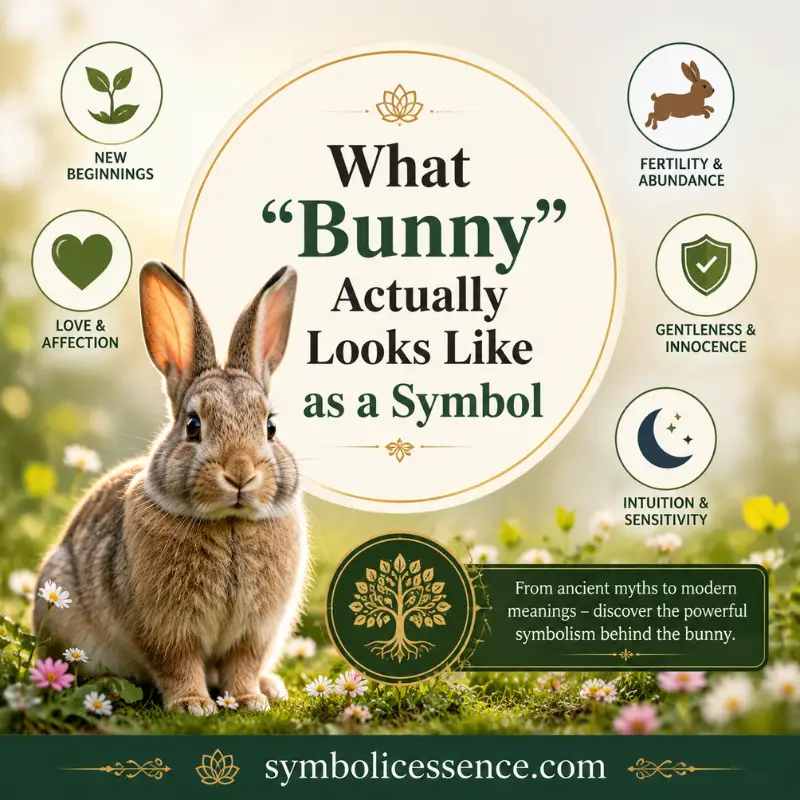
Visually, “bunny” almost always means a rounder, softer version of a rabbit than what you’d see in nature or in older folklore art. Think plush toys, cartoon characters with oversized eyes, pastel coloring, and simplified features — a look built for approachability rather than realism. This is the version you see on onesies, greeting cards, and Easter displays, and it’s distinct from the leaner, more naturalistic hare or rabbit imagery found in older mythological art.
The word also shows up divorced from any animal imagery at all, purely as a term of endearment (“hey, bunny”) or as a stand-alone brand mark, like the Playboy bunny silhouette, which reduced the image down to two ears and a bow tie.
What Different Bunny Colors Symbolize
Color can change how people interpret bunny imagery, especially in dreams, tattoos, illustrations, gifts, and seasonal decor. However, these meanings come mainly from modern color associations rather than a single universal tradition.
| Bunny Color | Common Symbolic Meaning | Typical Context |
|---|---|---|
| White | Innocence, peace, hope, good fortune | Weddings, dreams, Easter, fantasy stories |
| Black | Mystery, independence, hidden feelings | Tattoos, alternative fashion, dream imagery |
| Brown | Stability, simplicity, comfort | Nature art, rustic decor, realistic designs |
| Gray | Balance, caution, maturity | Wildlife imagery, dreams, neutral decor |
| Pink | Affection, sweetness, playful love | Valentine’s Day, gifts, children’s products |
A white bunny often represents purity, gentleness, or a hopeful beginning because American culture already connects white with innocence and peace. The White Rabbit in Alice’s Adventures in Wonderland adds another layer: curiosity, urgency, and the invitation to enter an unfamiliar world.
Black bunny imagery feels more mysterious. It can suggest independence, private emotions, or an overlooked side of someone’s personality. It does not automatically predict bad luck. The surrounding artwork, event, or dream usually provides the more important clues.
Brown bunnies remain closest to the animal’s natural appearance. As a result, they often convey groundedness, home, humility, and simple comfort. Gray can suggest caution or emotional balance, while pink bunny designs usually emphasize sweetness, romance, or youthful playfulness.
These interpretations work best as visual guidelines, not fixed rules. A person’s memories, culture, and reason for choosing the image may matter more than the bunny’s color.
The Core Meaning: Softness, Innocence, and Affection
If rabbit symbolism is mostly about fertility and renewal, bunny symbolism is mostly about tenderness. The word signals something small, gentle, and easy to love, which is exactly why it gets used so often for babies, young children, and romantic partners. Calling something a “bunny” is shorthand for saying it’s harmless and endearing, a meaning that has very little to do with the animal’s actual folklore history.
That gentleness also explains why bunny imagery dominates products aimed at infants and toddlers. A rabbit tattoo might reference luck or transformation; a bunny nursery mobile is communicating something much simpler — safety, softness, comfort.
Where the Word Came From
Bunny” likely developed from an older English dialect word, “bun,” used as a term of endearment for a rabbit and, separately, for a person, roughly meaning something like “dear” or “sweetheart.” Diminutive forms like “bunny” grew out of that affectionate base sometime in the 1600s and were already established as a pet name for both rabbits and people well before the modern Easter Bunny character existed.
That’s a useful distinction to hold onto: the word “bunny” as a term of affection predates its association with the animal-based holiday character by centuries. The two meanings developed on parallel tracks and later reinforced each other, rather than one directly causing the other.
From Rabbit Folklore to Bunny Cuteness
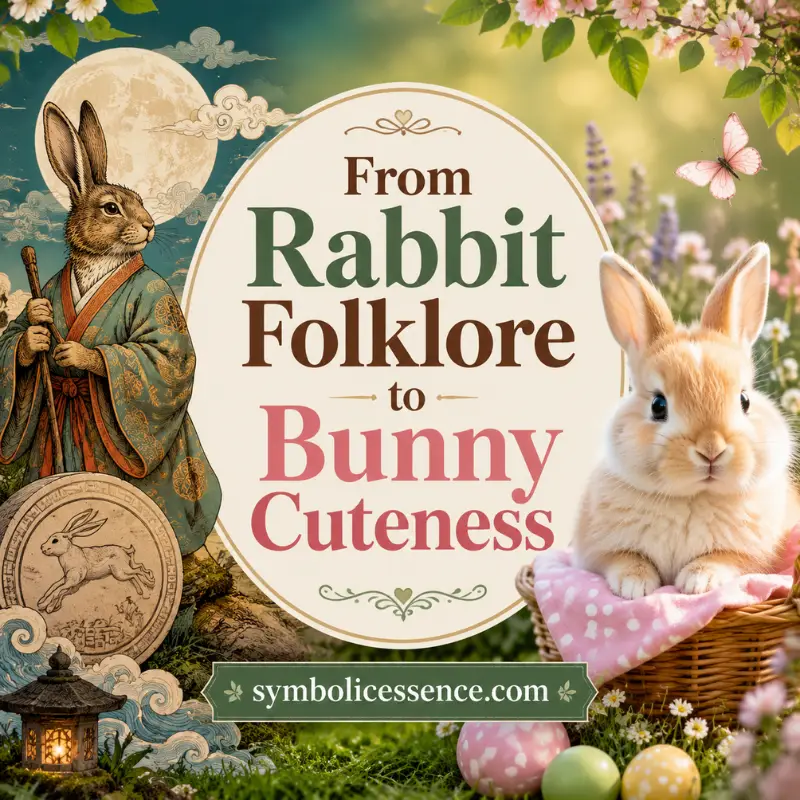
Older rabbit and hare folklore — fertility goddesses, lunar mythology, trickster stories — carried real mythic weight. Somewhere along the way, as that folklore filtered into American consumer and children’s culture, a lot of that weight got replaced with simple cuteness. The Easter Bunny is the clearest example: a character with roots in pre-Christian European spring-goddess tradition that, by the time it became a fixture of American Easter marketing, had been reduced to a friendly cartoon figure who hides eggs and delivers candy.
This softening is part of a broader pattern in how folklore gets absorbed into commercial culture — the visual symbol survives while the older belief system underneath it quietly disappears. “Bunny” is essentially the branding-friendly, kid-safe version of a much older and stranger set of ideas about rabbits.
Bunny Symbolism in the Bible and Christianity
The Bible does not present the bunny as a symbol of Easter, resurrection, or Jesus. Some English translations mention a rabbit or hare in biblical dietary laws, including Leviticus 11:6 and Deuteronomy 14:7. In those passages, the animal appears as food that ancient Israelites could not eat, not as a spiritual emblem of renewal or good fortune. Translation choices vary, with some versions using “hare” instead of “rabbit.” Leviticus 11:6 provides one example.
Modern Christians often connect bunnies with Easter because the animals suggest spring, new life, and fertility. These seasonal ideas can complement Easter’s themes of life and renewal, but they come from later customs rather than Scripture.
The familiar egg-delivering Easter Bunny has a more specific cultural history. Written German accounts describe an Easter hare in the late 1600s, and German-speaking immigrants later carried the custom to colonial America. Children prepared nests for the hare’s colored eggs, and those nests eventually developed into modern Easter baskets. The Henry Ford traces this documented tradition.
Therefore, Christian and cultural meanings should remain separate. The Resurrection stands at the center of Christian Easter belief, while the bunny serves as a popular seasonal character. Some families combine the two traditions, while others avoid the Easter Bunny because it does not come from the Bible.
Claims that the Easter Bunny directly descended from a specific pre-Christian goddess remain debated. The safest historical conclusion is that rabbits already represented fertility and new life, while the documented egg-bringing hare tradition developed in German-speaking Europe.
Bunny Symbolism in the United States
In the U.S., “bunny” shows up constantly in contexts built around softness and approachability rather than mythology. The Easter Bunny is the biggest and most obvious example — a cheerful, non-threatening character who has become a fixture of spring marketing, school events, and family photos, largely disconnected from any of the older fertility symbolism it descends from.
Beyond Easter, “bunny” functions as a common term of endearment between romantic partners and toward children, on the same shelf as “honey” or “sweetheart.” It’s also become a recognizable piece of American branding history through the Playboy Bunny, a logo introduced in 1953 that turned a soft, harmless-sounding word into a symbol loaded with very different associations — glamour, sexuality, and nightlife rather than innocence. That contrast is part of what makes the word interesting: the same four letters can signal a nursery mobile or a nightclub logo depending entirely on context.
There’s also a slang layer. “Bunny” gets attached to hobbies and subcultures as a lighthearted descriptor — “gym bunny,” “ski bunny,” “beach bunny” — usually implying someone enthusiastic, attractive, and a little bit devoted to a specific activity or scene. This usage keeps the word’s soft, approachable tone while dropping the animal connection almost entirely.
| Context | Meaning in the USA | Common Associations | Notes |
|---|---|---|---|
| Easter and spring | Innocence, cheerfulness | Egg hunts, pastel colors, cartoon bunny | Softened descendant of older fertility folklore |
| Term of endearment | Affection, tenderness | Used for partners, children, pets | Traced to 1600s English dialect roots |
| Nursery and baby products | Softness, safety | Plush toys, onesies, mobiles | Leans on the word’s gentle, non-threatening tone |
| Playboy Bunny | Glamour, sexuality, branding | Bow tie logo, nightlife, 1950s pop culture | Deliberately repurposes a soft word for a bold image |
| Slang (“gym bunny,” etc.) | Enthusiasm, devotion to a scene | Hobby and subculture nicknames | Keeps the affectionate tone, drops the animal link |
| Tattoos and fashion | Playfulness, youthfulness | Rounded, cartoonish bunny art | Reads younger and softer than rabbit or hare imagery |
Cross-Cultural Meaning Beyond the U.S.
Outside the United States, the specific word “bunny” doesn’t translate the same way — most languages don’t have an equivalent childhood diminutive that carries quite the same tone. But the underlying idea, a softened, affectionate version of rabbit imagery aimed at children, shows up elsewhere too. In the UK, “bunny” carries a nearly identical meaning to its American usage, including as a term of endearment, since the word originated in British English before crossing the Atlantic.
In Japan, kawaii culture — the broader aesthetic built around cuteness — has produced its own tradition of round, big-eyed bunny characters in everything from stationery to mascots, functioning similarly to how “bunny” operates in the U.S. even though the word itself is different. That parallel suggests the appeal of a softened, cartoon rabbit isn’t uniquely American, even if the specific vocabulary is.
Emotional and Psychological Meaning
The emotional pull of “bunny” comes down to how effectively it signals vulnerability without threat. A rounded shape, big eyes, and soft coloring hit reliably on what people find endearing in general — the same features that make baby animals appealing across species. “Bunny” imagery leans into that on purpose, which is exactly why it’s such a common choice for anything meant to feel safe, comforting, or non-intimidating.
That’s also why the word works so well as a pet name. Calling someone “bunny” communicates warmth and a slightly protective affection, similar to calling someone “baby,” without any of the mythic or folkloric baggage that “rabbit” can carry in more symbolic contexts.
What Does Seeing a Bunny Mean Spiritually?
People often interpret a bunny sighting as a reminder of gentleness, awareness, and fresh possibilities. Because rabbits watch their surroundings closely and move quickly when danger appears, an encounter may encourage you to notice subtle changes instead of rushing ahead without thinking.
A bunny crossing your path does not carry one proven supernatural message. Its meaning depends on what was happening at that moment and what the animal brought to mind. If you were facing a new opportunity, it might represent growth or a fresh start. During an anxious period, the same encounter might reflect vulnerability, caution, or the need to create a safer environment.
Some spiritual interpretations connect bunnies with abundance because rabbits reproduce rapidly. However, abundance does not have to mean money or pregnancy. It can refer to growing ideas, stronger relationships, creative energy, or opportunities that need care.
The bunny’s behavior can also influence the interpretation:
- A calm bunny may suggest patience, comfort, or quiet confidence.
- A running bunny can represent urgency, avoidance, or quick action.
- A hiding bunny may reflect caution, privacy, or a need for safety.
- Several bunnies can suggest community, family growth, or multiplying responsibilities.
- A bunny that repeatedly appears may invite you to consider what softness, fear, or renewal means in your current life.
These readings offer prompts for personal reflection rather than predictions. Sometimes seeing a bunny simply means that wildlife shares your surroundings. The symbolic value comes from the meaning you connect to the encounter.
What It Means to Dream About a Bunny
A bunny in a dream commonly represents tenderness, vulnerability, affection, growth, or a desire for safety. Still, no dream image has one fixed interpretation. Your emotions and the bunny’s behavior offer better clues than a universal dream dictionary.
A peaceful bunny may reflect comfort, trust, or a gentle part of your personality. If you held or cared for it, the dream could point toward a relationship, idea, or responsibility that needs patient attention. Baby bunnies may suggest developing plans, family concerns, or several small duties demanding your time.
A running or frightened bunny can express anxiety or avoidance. You may feel exposed, pressured, or eager to escape a difficult situation. Meanwhile, chasing a bunny might represent an opportunity or emotional connection that seems difficult to reach.
The dream’s details can shift its meaning:
- A white bunny: hope, innocence, curiosity, or a promising opportunity
- A black bunny: uncertainty, private feelings, mystery, or independence
- A brown bunny: stability, home, routine, or practical needs
- An injured bunny: emotional sensitivity, damaged trust, or concern for someone vulnerable
- Many bunnies: expanding ideas, family matters, abundance, or too many small obligations
- A pet bunny: companionship, comfort, care, or dependence
Rather than treating the dream as a prediction, consider what happened before it. Ask how you felt, what the bunny was doing, and whether gentleness, fear, growth, or responsibility currently plays an important role in your life.
Why Bunny Imagery Shows Up in Fashion and Personal Style
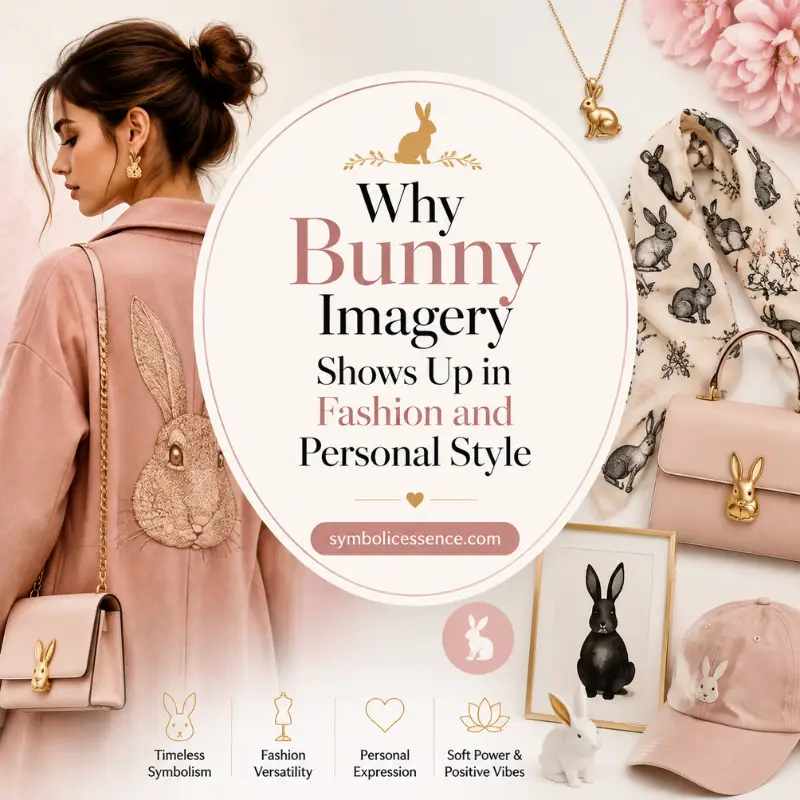
Where a rabbit tattoo often draws on older folklore meanings — luck, transformation, moon symbolism — bunny-style imagery in fashion and tattoos usually skips that entirely in favor of straightforward cuteness or youthfulness. A rounded, cartoon-style bunny tattoo signals playfulness rather than mythology, and it’s a popular choice specifically because it reads as lighthearted rather than symbolic or serious.
The Playboy Bunny is the major exception, and it’s worth separating out because it works differently from every other use of the word. Rather than leaning on softness, the logo intentionally pairs a cute, harmless-sounding word with a glamorous, sexualized brand identity, and that contrast is part of what made it memorable. It’s less an extension of bunny’s cute meaning than a pointed subversion of it.
Bunny Symbolism in Decor and Everyday Design
Nursery and children’s decor is probably the single biggest modern use of bunny imagery in the U.S. Soft-toy bunnies, bunny-shaped nightlights, and pastel bunny illustrations are a staple of baby shower gifts and children’s bedrooms, chosen specifically because the word and the image both read as gentle and unthreatening. Unlike rabbit-themed decor, which sometimes leans on folklore or moon imagery for older audiences, bunny decor almost always targets very young children or a deliberately whimsical, youthful aesthetic.
Spring home decor is the other major category, closely tied to the Easter season, where bunny figurines and illustrations show up on everything from kitchen towels to seasonal wreaths.
Modern Usage: Pop Culture and Digital Life
Bunny characters are everywhere in American children’s media — from the Velveteen Rabbit’s soft-toy origins to the countless cartoon bunnies designed specifically to be huggable and merchandisable. That entertainment-industry preference for “bunny” over “rabbit” isn’t incidental; character designers consistently reach for round, big-eyed bunny proportions when the goal is maximum cuteness and marketability.
Online, “bunny” shows up heavily in cute-content culture, similar to how cat content dominates certain corners of social media. Bunny-themed usernames, emoji, and slang (“that’s bunny behavior,” used ironically for something soft or gentle) circulate steadily among younger users, keeping the word’s core meaning — soft, sweet, a little silly — intact even as the specific references shift.
Common Misunderstandings and Controversies
The most common mix-up is treating “bunny” and “rabbit” as fully interchangeable words carrying the same symbolic weight. They’re related, but the tone is different enough that swapping one for the other changes the meaning: “rabbit symbolism” points toward folklore and mythology, while “bunny symbolism” points toward cuteness and affection.
The Playboy Bunny is the other recurring source of confusion, since it pulls the soft, innocent word into an entirely different register. Some critics have pointed out the irony of using a childlike, affectionate term for an overtly sexualized brand, while others have defended the logo as a knowing, playful contrast rather than something meant to mislead. Either way, it’s a modern branding choice rather than a continuation of older bunny folklore, and it’s worth treating as its own separate thread rather than folding it into the word’s gentler, more common meaning.
How the Meaning Has Evolved Over Time
“Bunny” started as a small dialect word of affection, picked up the animal association fairly early, and then got pulled in two very different directions over the last century: toward maximum wholesomeness in children’s and holiday culture, and toward glamour and sexuality through the Playboy brand. Both directions grew out of the same soft, informal starting point — one leaned into the tenderness, the other deliberately played against it.
What’s stayed consistent through all of that is the tone. Even the Playboy Bunny, using the word in its most subversive context, still depends on the underlying association with softness and approachability to create its contrast. Strip away every specific use case and the word still reads as gentle before anything else, which is really the throughline connecting a baby’s nursery mobile to a decades-old nightlife logo.
FAQs
Is “bunny” just a nicer way of saying rabbit?
Not exactly. Rabbit” draws on folklore, mythology, and themes like fertility and lunar symbolism, while “bunny” is a more informal, modern term built around softness and affection rather than any deeper mythic meaning.
Where does calling someone “bunny” come from?
It traces back to English dialect roots from the 1600s, where “bun” and later “bunny” were affectionate terms applied to both rabbits and people. That usage predates the modern Easter Bunny character by centuries.
What does the Playboy Bunny logo actually represent?
Interpretations vary and remain genuinely contested, but the logo is often read as a symbol of glamour, confidence, and sexual liberation. Its lasting impact comes largely from pairing a soft, innocent-sounding word with a bold, adult brand identity.
Do bunny tattoos carry any spiritual meaning?
Generally not. Bunny-style tattoos tend to lean toward playfulness and a youthful aesthetic rather than the moon or fertility symbolism sometimes tied to rabbit or hare tattoos.
Why is bunny imagery so common in baby and nursery products?
The rounded shapes and soft coloring associated with “bunny” imagery consistently read as gentle and non-threatening, making it a natural fit for anything designed for babies and young children.
Does “bunny” always imply a romantic relationship?
No. It’s frequently used romantically, but it’s just as common as an affectionate nickname for children, pets, or friends, and it appears in unrelated slang like “gym bunny” or “ski bunny.”
How did the Easter Bunny end up looking so different from a real rabbit?
Its cartoonish, huggable look developed as older, more mythic European hare and rabbit folklore was gradually adapted for American holiday marketing aimed at children, trading historical symbolism for a simplified, friendly design
What can a dead bunny symbolize?
A dead bunny may represent lost innocence, interrupted growth, grief, or the end of a gentle phase of life in art and dreams. In a real-life encounter, however, it should not automatically be treated as an omen.
What does a bunny symbolize in love?
In romantic settings, a bunny usually represents tenderness, affection, playfulness, and emotional closeness. Because “bunny” also works as a pet name, the image can communicate warmth without carrying a formal or deeply spiritual message.
Conclusion
Bunny symbolism is really about tone rather than mythology. Where rabbit imagery reaches back toward fertility goddesses and lunar folklore, “bunny” is a newer, softer word built for affection—used for children, partners, holiday characters, and even, in the case of the Playboy logo, deliberately turned against its own gentle meaning for effect.
That range is exactly what makes the word interesting. A single term can describe a plush toy on a crib rail and a decades-old adult brand mark, and it works in both directions because the soft, approachable core of the word never really changes—only the context around it does.
Next time “bunny” turns up on a onesie, a Valentine’s card, or a vintage magazine cover, it is worth noticing how much that one small, cute-sounding word is quietly doing in each of those very different settings.