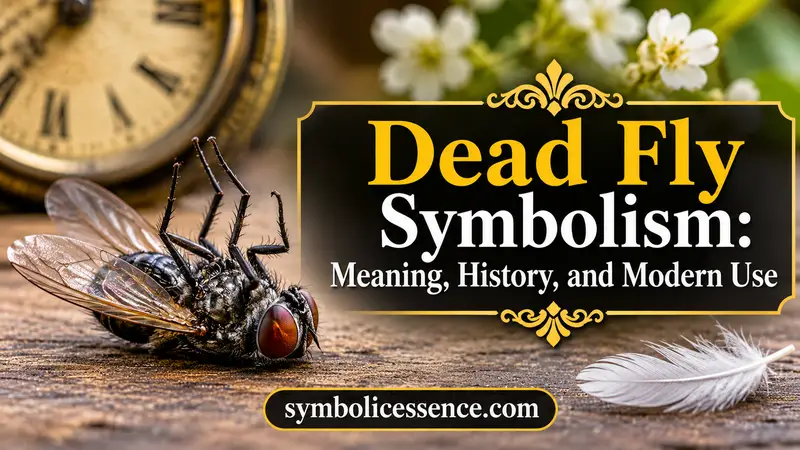
Finding a dead fly on a windowsill, near a doorway, or inside your home can make you stop and wonder why it appeared there. Flies are common household insects, but their short lives, association with waste, and sudden appearance in unexpected places have given them several symbolic meanings.
Dead fly symbolism often relates to endings, neglected problems, decay, and the need to clear away something that no longer belongs in your life. Some people also connect a dead fly with closure, personal change, or a reminder to pay attention to their surroundings.
In American culture, people may interpret this small discovery through personal beliefs, folklore, spiritual traditions, or simple curiosity. There is no single accepted meaning, and the location and circumstances can influence how someone understands the experience.
Quick Answer
A dead fly commonly symbolizes endings, decay, neglected responsibilities, and the need to remove something unwanted from your life. Historically, flies became associated with disease, spoiled food, death, and decay because of their connection to waste and decomposing matter.
TL;DR
- A dead fly can represent endings and the completion of a stage.
- Its association with decay comes from its feeding and breeding habits.
- American folklore sometimes connects unexpected animal encounters with personal reflection.
- Finding one indoors can remind people to address neglected problems.
- Modern interpretations often focus on closure, change, and letting go.
- A dead fly is not reliable evidence of bad luck or an approaching event.
What Does a Dead Fly Look Like in Everyday Life?
A dead housefly is usually found lying on its back or side, with its legs curled inward or extended. Its wings may look folded, damaged, or slightly separated from its body. Depending on how long it has been dead, the insect may appear dry, dusty, or darkened.
Houseflies are among the most familiar insects in American homes. People commonly find them near:
- Windowsills where insects gather around natural light.
- Kitchen counters and dining areas.
- Doorways and window frames.
- Garage floors and storage spaces.
- Outdoor porches and patio furniture.
- Trash cans and compost containers.
The location can influence the meaning someone assigns to the discovery.
For example, a dead fly beside a closed window might suggest a feeling of being stuck or unable to move forward to someone who enjoys symbolic interpretation. A fly found near an overflowing trash can may instead remind someone of neglected responsibilities.
These interpretations are personal rather than established facts. The insect itself usually has a straightforward physical explanation: it may have died from dehydration, lack of food, insecticide exposure, age, or environmental conditions.
What Does a Dead Fly Symbolize Today?
Several interpretations appear in modern discussions about insects and symbolism. They generally connect to the fly’s short life, unpleasant associations, and relationship with decay.
The End of a Difficult Period
A dead fly can represent the end of something uncomfortable.
People sometimes interpret its death as a reminder that an unwanted situation does not have to continue forever. This might relate to an unhealthy habit, a stressful responsibility, or a relationship that has reached its natural conclusion.
For example, someone leaving a difficult workplace might see the insect as a personal reminder to move forward.
Neglected Problems
Flies are often associated with places that need cleaning or attention. Because of this connection, a dead fly may represent something that has been ignored for too long.
It can serve as a reminder to handle unfinished tasks, repair damaged relationships, or address problems before they become harder to manage.
Decay and Impermanence
A dead insect naturally represents the end of a living process. Its body eventually dries out or decomposes, returning to the environment.
This makes it an understandable image of impermanence: living things change, disappear, and become part of natural cycles.
Removing Unwanted Influences
Some modern spiritual interpretations treat a dead fly as a sign of something unpleasant being removed.
In this reading, the insect represents an unwanted influence, while its death suggests that the influence has lost its place or importance.
This is a personal belief, not a scientifically established message.
Where Did the Historical Associations With Flies Begin?
The negative associations surrounding flies developed partly from everyday experiences with food, sanitation, and disease.
Long before modern sanitation systems, people regularly encountered flies around animal waste, spoiled food, open markets, and crowded living spaces.
Houseflies feed on many types of organic material. They can also transfer microorganisms between contaminated surfaces and food.
These behaviors made them unwanted visitors in homes and food storage areas.
Ancient Egypt and the Fly as a Sign of Courage
Interestingly, flies did not always carry negative associations.
In ancient Egypt, the fly became associated with courage and military achievement. During the New Kingdom period, especially around the 16th and 15th centuries BCE, fly-shaped military decorations were awarded to individuals recognized for bravery.
The famous Golden Fly pendants associated with Queen Ahhotep are an example of this tradition.
These objects show that a creature commonly viewed as irritating could also represent persistence and courage.
However, this historical association concerns the fly itself, not specifically a dead fly.
Medieval Europe and Disease
During medieval and later European history, flies became increasingly associated with filth, spoiled food, and illness.
People did not understand microorganisms as modern science does, but they observed that insects frequently appeared around unsanitary places.
During periods of plague and other disease outbreaks, insects could become part of the broader imagery of death and suffering.
The connection between flies and decay gradually strengthened through everyday experience, religious artwork, literature, and public health concerns.
The Rise of Modern Sanitation
By the 19th and early 20th centuries, sanitation campaigns increasingly emphasized controlling flies.
Public health campaigns connected household cleanliness with preventing disease. The American anti-fly movement became particularly visible in the early 1900s.
Posters encouraged people to cover food, maintain clean homes, and prevent flies from breeding.
These campaigns helped establish the fly as a recognizable image of contamination and poor hygiene in American public life.
How Is a Dead Fly Interpreted in American Culture?
In the United States, the meaning of an unexpected dead insect usually depends on the person’s background and beliefs.
There is no nationwide American tradition that assigns one fixed meaning to finding a dead fly.
Still, several cultural associations help explain why people may interpret the experience differently.
Household Cleanliness
The most familiar American interpretation is practical rather than spiritual.
A dead fly on a kitchen counter can remind someone to clean surfaces, check food storage, or inspect nearby trash.
In restaurants, grocery stores, and food preparation areas, flies are treated as sanitation concerns rather than symbolic visitors.
Personal Reflection
Some Americans use ordinary events as opportunities to reflect on their lives.
A dead fly might remind someone of an unpleasant situation that needs attention or a habit they want to leave behind.
For example, a person beginning a new chapter after a difficult breakup might connect the discovery with the idea of closure.
The meaning comes from the person’s circumstances, not from a universal cultural rule.
Halloween and Images of Death
Flies sometimes appear in Halloween decorations, horror artwork, and haunted-house displays.
Their association with decaying matter makes them useful visual details in scenes involving abandoned buildings, graveyards, and fictional remains.
In these settings, a dead fly can help create an atmosphere of neglect or death.
Art and Literature
Artists and writers sometimes use dead insects to represent mortality, corruption, or the passage of time.
A small insect beside a wilted flower, for example, can suggest that beauty and life are temporary.
In American visual culture, such images may appear in gothic illustrations, still-life artwork, alternative fashion photography, and dark fantasy designs.
These uses are artistic choices rather than established national customs.
What Does Finding a Dead Fly Inside Your House Mean?
The room or location where someone discovers a dead fly can affect its personal interpretation.
However, there is no verified symbolic rule connecting a particular room with a specific future event.
| Context | Meaning in USA | Common Associations | Notes |
| Kitchen | Neglected responsibilities or cleanliness | Food, waste, contamination | Check food storage and nearby trash. |
| Bedroom | Personal closure or private concerns | Rest, relationships, personal space | Usually a personal interpretation. |
| Living room | Changes in family or social life | Shared spaces, relationships | No established traditional meaning. |
| Windowsill | Feeling stuck or reaching an ending | Boundaries, freedom, transition | Often interpreted through the image of a trapped fly. |
| Front doorway | Transition or something coming to an end | Home, entry, departure | No reliable connection with future events. |
Dead Fly in the Kitchen
The kitchen has a direct connection with food and sanitation.
A dead fly near a fruit bowl, sink, or garbage container may encourage someone to check for spoiled food or clean a surface.
Symbolically, some people connect it with neglected household matters.
Dead Fly in the Bedroom
The bedroom is a private space associated with sleep, relationships, and personal life.
Finding a dead fly there may lead someone to think about emotional matters or personal changes.
There is no reliable evidence that it predicts relationship problems, separation, or bad news.
Dead Fly Near a Window
Windows are associated with light, movement, and the boundary between indoor and outdoor spaces.
A dead fly near a window can become a visual reminder of restriction or an opportunity that has passed.
This interpretation comes from the image of an insect attracted to light but unable to escape.
Dead Fly Near the Front Door
A doorway naturally represents an entrance or exit.
For someone who enjoys interpreting everyday objects symbolically, a dead fly near the entrance might suggest leaving an unwanted situation behind.
In practical terms, flies may simply enter through an open door and die indoors.
Does a Dead Fly Have a Spiritual Meaning?
Some modern spiritual discussions connect dead insects with endings, release, and changes in personal circumstances.
In these interpretations, the death of the fly is viewed as an image of something unwanted reaching its conclusion.
Three common personal interpretations include:
Letting go: The insect may remind someone to stop holding on to an outdated habit, conflict, or expectation.
Personal awareness: Its unexpected appearance may encourage someone to pay attention to an issue they have overlooked.
Closure: The end of the insect’s life may become a personal image of completing a difficult chapter.
These meanings belong to individual spiritual interpretations. They should not be confused with a documented religious teaching or a universal belief.
Different people may interpret the same discovery in completely different ways. Someone may see a reminder to reflect, while another person simply picks up the insect and cleans the area.
Why Do People Connect Dead Insects With Endings?
There is a simple psychological reason people often associate dead insects with change and loss.
Humans naturally notice objects that look unusual, unexpected, or out of place. A dead fly on a clean windowsill attracts attention because it interrupts the normal appearance of the room.
The brain then tries to understand why it is there.
Several factors can influence the meaning someone assigns to it.
Personal Experiences
If someone recently experienced a major life change, an ordinary discovery may remind them of that event.
A person who has recently ended a difficult friendship might connect a dead insect with the idea of moving on.
Emotional Associations
Flies are commonly connected with unpleasant environments. Their appearance can trigger feelings of discomfort, irritation, or disgust.
When the insect is dead, those feelings may shift toward relief or the sense that an unwanted presence has ended.
The Search for Patterns
People often look for connections between unrelated events, particularly during uncertain periods.
This is part of ordinary human pattern recognition. It can help people create personal meaning, but it can also lead them to assume that random events predict future outcomes.
Finding a dead fly does not establish that something good or bad will happen.
Can a Dead Fly Represent Bad Luck?
Some people associate dead insects with misfortune because flies are connected with death, waste, and unpleasant surroundings.
However, there is no widely established American superstition stating that finding a dead fly automatically brings bad luck.
It is also important to separate traditional folklore from internet interpretations.
Online spiritual discussions sometimes present specific meanings for finding insects in certain rooms or at particular times. These explanations may be meaningful to individual readers, but many lack a traceable historical source.
A dead fly does not predict financial trouble, illness, relationship failure, or family conflict.
If the discovery makes someone uncomfortable, the most reasonable response is to remove the insect and check the surrounding area.
What Does a Dead Fly Mean in Dreams?
Dream interpretations involving dead flies are usually personal and depend on the dreamer’s experiences.
A fly in a dream may represent irritation, an unwanted distraction, or a small problem that keeps returning.
When the fly is dead, the image may suggest that the disturbance has ended.
Some possible interpretations include:
- A dead fly on the floor: A problem may feel finished or less important.
- Several dead flies: You may be thinking about multiple unfinished concerns.
- Killing a fly: You may be trying to remove an irritation or regain control.
- A dead fly near food: You may feel concerned about something affecting your comfort or security.
- A fly that suddenly dies: You may be processing an unexpected ending.
Dreams do not have fixed meanings, and there is no scientific method for assigning one universal interpretation to a particular insect.
Your emotions during the dream matter. Feeling relieved after seeing a dead fly suggests a different personal association from feeling frightened or disgusted.
Why Does a Dead Fly Appear in Art and Literature?
Dead insects can communicate ideas without requiring much explanation.
A small insect lying beside a beautiful object creates a contrast between life and death. This contrast has appeared in still-life artwork, literary descriptions, and gothic visual styles.
Still-Life Artwork
European still-life painting traditions sometimes included insects, damaged fruit, flowers, and other signs of passing time.
These details helped remind viewers that physical beauty and material possessions do not last forever.
A dead fly in this setting can suggest decay or the temporary nature of life.
Gothic and Horror Imagery
Modern horror illustrations often use flies to suggest abandoned places, contaminated surroundings, or death.
A dead insect can contribute to the same atmosphere by making an otherwise ordinary room appear neglected.
Modern Photography
Some contemporary photographers use close-up images of dead insects to highlight small details that people normally ignore.
The fine structure of the wings, legs, and body can turn an unpleasant object into a subject of visual study.
This approach shifts attention from disgust toward observation and the natural world.
How Has the Meaning Changed Over Time?
The cultural interpretation of flies has changed according to how people lived, what they understood about disease, and how artists used insect imagery.
The fly has never had only one meaning.
In ancient Egypt, it could represent military courage. In later European societies, it became strongly associated with unsanitary conditions and disease. Modern American culture generally recognizes it as a household pest, although artists and spiritual writers may give it additional meanings.
The following timeline shows the main changes.
Ancient Egyptian Period
During the New Kingdom, fly-shaped decorations could recognize military bravery.
This association shows that flies were not always viewed only as unwanted insects.
Medieval and Early Modern Europe
As cities grew and sanitation remained limited, flies became familiar around waste, spoiled food, and illness.
Their appearance in religious and artistic settings could also support images of death and decay.
19th and Early 20th Centuries
Urban growth and public health campaigns made fly control an important part of sanitation education.
In the United States, anti-fly campaigns encouraged cleaner homes, protected food, and better waste management.
Late 20th Century
As public health knowledge became more widespread, flies were increasingly understood through biology and sanitation.
At the same time, horror films, gothic art, and alternative fashion continued using insect imagery to communicate decay and discomfort.
2020–2026
Online symbolism discussions have made personal interpretations of ordinary encounters easier to share.
People now encounter explanations connecting dead insects with closure, personal reflection, or unwanted influences.
These interpretations are part of modern online culture, not evidence of a newly established historical tradition.
How Do Younger Americans Interpret This Symbol Differently?
Younger Americans often encounter symbolic interpretations through social media, short-form videos, online spirituality communities, and alternative art.
This has changed how people discuss everyday discoveries.
A dead fly might become the subject of a short video about letting go, a photograph in a dark aesthetic collection, or a discussion about unusual household encounters.
Older interpretations often focused more directly on sanitation, disease, and household cleanliness.
Younger online discussions may add personal themes such as:
- Ending an unhealthy habit.
- Moving away from negative relationships.
- Recognizing an uncomfortable situation.
- Accepting that something has changed.
- Finding meaning in an ordinary experience.
However, age does not determine belief. Plenty of younger people see a dead fly as nothing more than a dead insect, while people from older generations may enjoy spiritual or symbolic interpretations.
Social media has increased the visibility of these ideas, but it has not established one shared American belief.
Is a Dead Fly a Suitable Design for Tattoos or Jewelry?
Unlike butterflies, dragonflies, and bees, dead flies are not common mainstream tattoo or jewelry motifs.
Still, they can appear in alternative art, gothic designs, insect illustrations, and personal artwork.
A person choosing this image may want to express an unconventional idea.
Tattoo Designs
A dead fly tattoo might include:
- A small fly resting on its back.
- A detailed insect with transparent wings.
- A fly beside a wilted flower.
- A minimalist black outline.
- An insect enclosed within a geometric frame.
Depending on the design, it could represent mortality, imperfection, discomfort, or an interest in natural history.
Jewelry and Accessories
Fly-shaped jewelry exists, but dead-fly designs are less common.
An artist might use a small insect pendant or an unusual brooch to create a gothic or nature-inspired look.
These designs are more likely to communicate individual taste than a widely recognized cultural message.
Home Decor
Insect illustrations sometimes appear in framed prints, scientific-style wall art, and vintage-inspired collections.
A dead fly can be included in artwork about decomposition, natural cycles, or the relationship between beauty and decay.
The intention behind the design matters more than the insect alone.
Common Misunderstandings
Several claims about dead flies are repeated online without enough historical or scientific support.
Understanding the difference between documented associations and personal interpretations helps prevent confusion.
Misunderstanding 1: Every dead fly is a warning.
There is no reliable evidence that finding one predicts an unpleasant event. Most dead flies have ordinary biological or environmental explanations.
Misunderstanding 2: Dead flies always represent evil.
Flies have carried different meanings across cultures and historical periods. Ancient Egyptian military decorations provide a clear example of a positive association.
Misunderstanding 3: A dead fly in the bedroom predicts relationship problems.
No established American tradition supports this claim. The bedroom location may influence personal interpretation, but it does not predict a relationship outcome.
Misunderstanding 4: All spiritual interpretations come from ancient traditions.
Many specific explanations shared online are modern interpretations. They should not automatically be described as ancient folklore.
Misunderstanding 5: A dead fly means the home is dirty.
One dead fly does not prove poor household cleanliness. It may have entered through an open window, become trapped, or died from natural causes.
FAQs
Is finding a dead fly a good sign or a bad sign?
Neither meaning is universal. Some people interpret it as the end of an unpleasant situation, while others associate it with decay or neglected problems. There is no reliable evidence that the discovery predicts good or bad luck.
Does a dead fly have a biblical meaning?
The Bible mentions flies in several contexts, including the plague of flies in Exodus and the image of dead flies spoiling perfume in Ecclesiastes 10:1. These passages use flies in specific religious and literary settings, but they do not establish a universal meaning for finding a dead fly at home.
What does finding two dead flies mean?
Two dead flies do not have an established traditional meaning. From a practical perspective, they may have entered the same room and encountered similar conditions, such as dehydration, insecticide, or limited access to food.
Does a dead fly mean someone is thinking about me?
There is no documented historical or scientific connection between finding a dead fly and another person’s thoughts. This idea is better understood as a personal superstition rather than an established cultural belief.
Why do dead flies keep appearing near my windows?
Flies are attracted to light and may gather around windows when trying to move outdoors. If several die in the same location, check window screens, nearby food sources, possible insecticide exposure, and whether the insects can escape.
What does a dead fly mean in a dream spiritually?
Some modern spiritual interpretations connect it with the end of an unwanted influence or the completion of a difficult situation. However, dream meanings depend on personal experiences and should not be treated as predictions.
Can a dead fly symbolize transformation?
Yes, in a personal or artistic interpretation, it can represent the end of one stage and the beginning of another. The connection comes from the broader association between death, change, and the natural cycle of life rather than a specific historical tradition about dead flies.
Conclusion
Dead fly symbolism commonly centers on endings, decay, neglected problems, and the removal of unwanted things. These interpretations developed from the insect’s relationship with waste, spoiled food, and disease, while historical examples such as ancient Egyptian military decorations show that flies have also represented courage and achievement.
In modern American culture, a dead fly can be viewed through practical, artistic, psychological, or spiritual perspectives. Its meaning depends on the person interpreting it, the setting, and the associations they bring to the experience.
Sometimes, the simplest explanation is also the most useful: a dead fly is part of ordinary nature, but the small details we notice around us can still remind us to address unfinished matters, appreciate change, and pay attention to the spaces where we live.